
25 Foods That Cause Gas and Bloating
Have you ever felt like your belly suddenly turned into a giant, stretched-out balloon after a meal? I know I have! It is one of the most uncomfortable feelings ever.
You’re just sitting there, completely normal, and then suddenly –oof-your pants feel three sizes too tight, and your stomach feels like it’s full of trapped air.
That balloon-like feeling is what we call bloating, and it usually goes hand-in-hand with its noisy, sometimes embarrassing cousin: gas.
If you deal with this a lot, I want you to know something right away: you are definitely not alone, and your body isn’t broken. Millions of people feel this exact same way every single day.
Let’s break down exactly why this happens, why certain foods are sneaky gas-makers, and what we are going to cover in this article to help you get your belly feeling happy again.
Why Do Some Foods Cause Gas and Bloating?
Have you ever wondered why a big bowl of beans or a giant slice of cheesy pizza can make your stomach expand like a pool float, while other foods don’t bother you at all? It all comes down to what happens inside your belly after you swallow.
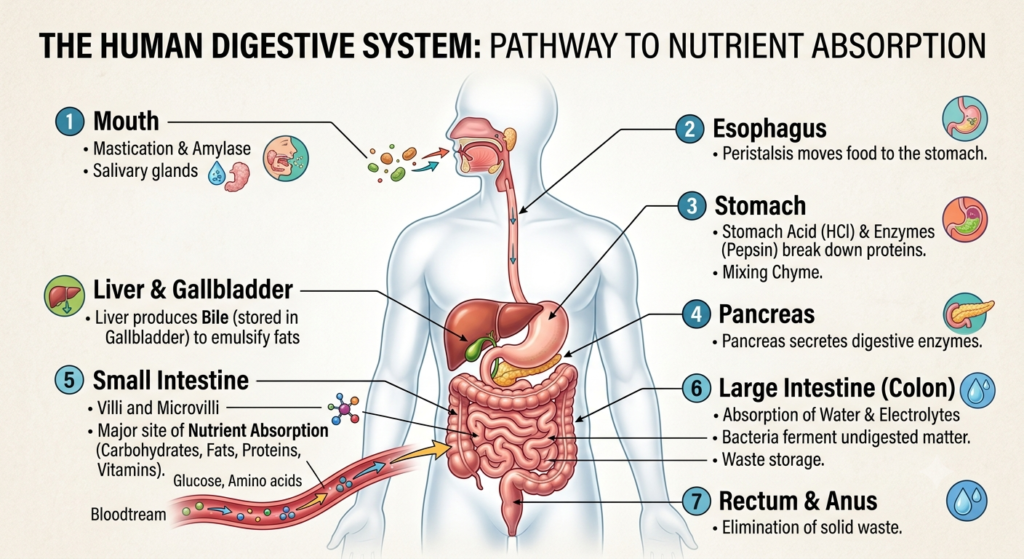
Our bodies process every single thing we eat differently, and sometimes, the way we digest certain foods creates a perfect storm for trapped air.
How Gas Forms During Digestion
To understand how gas gets into your belly in the first place, we have to look at the inner workings of your digestive system. It’s actually a mix of basic chemistry and how you eat.
Fermentation by gut bacteria
Deep inside your large intestine lives a massive community of billions of tiny, microscopic organisms called your gut bacteria.
Think of them as a little clean-up crew. When you eat foods that your stomach can’t completely break down, those leftovers travel down to these bacteria.
The bacteria go to work eating the leftovers, and as they chew away, they produce gas as a byproduct.
This process is called fermentation, it’s essentially a tiny science experiment happening right inside your gut!
Swallowed air
Not all belly gas comes from food; a lot of it comes from the outside world. Every single time you drink through a straw, chew on a piece of gum, gulp down a fizzy soda, or eat your meals super fast because you’re in a rush, you swallow tiny pockets of air.
This air gets trapped in your stomach and has to travel all the way through your digestive waterslide to get out.
Breakdown of carbohydrates
Carbohydrates or “carbs” are the sugars, starches, and fibers found in things like bread, fruits, and vegetables.
Some of these carbs are incredibly tough for your body to split apart. When your stomach handles complex carbs, it has to work extra hard to break them down into simple sugars.
If it can’t finish the job, those unbroken carbs end up as a giant feast for your gut bacteria, leading to a massive buildup of bubbles.
Why Some People Bloat More Than Others
Have you ever noticed that your friend can eat a massive plate of spicy, cheesy nachos and feel completely fine, while just a few bites makes your stomach feel super tight? That is because everyone’s inner digestive system is completely unique.
Food sensitivities
Sometimes, your body just doesn’t get along with a specific type of food. A food sensitivity means your digestive system gets irritated by certain ingredients.
It isn’t a dangerous allergy, but it means your gut struggles to process that food quietly, leading to inflammation, extra fluid, and a lot of uncomfortable swelling.
IBS
IBS, which stands for Irritable Bowel Syndrome, is a very common issue where a person’s gut is extra sensitive. If you have IBS, the muscles in your intestines might squeeze too hard or not enough, making it easy for gas to get trapped.
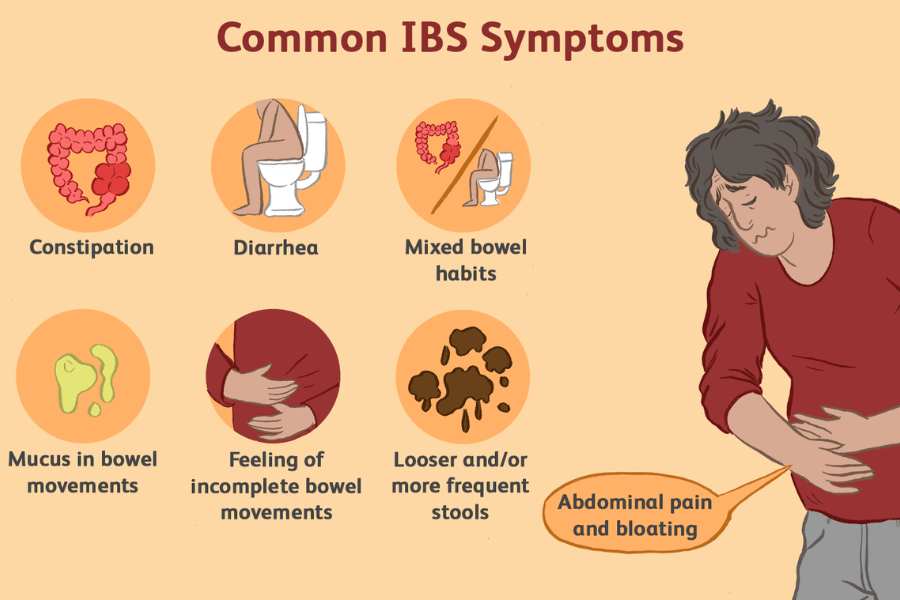
Even a tiny amount of normal gas that wouldn’t bother someone else can make a person with IBS feel incredibly bloated and painful.
Gut microbiome differences
Your unique collection of gut bacteria is called your microbiome, and no two people have the exact same mix.
Some people have bacteria teams that are super quiet and efficient. Others have teams that are incredibly enthusiastic, they throw a massive party every time you give them certain foods, producing way more gas bubbles than someone else’s bacteria would.
Digestive enzyme deficiencies
Think of enzymes as tiny pairs of chemical scissors that your body uses to snip food into tiny pieces. If you have an enzyme deficiency, it means your body is missing the specific pair of scissors needed for a certain food.
For example, people who are lactose intolerant don’t have enough of the enzyme scissors needed to snip apart the sugars in milk, causing the dairy to sit heavily in their belly and ferment.
25 Foods That Cause Gas and Bloating
Now that we know how gas forms, let’s look at the actual troublemakers. We are going to start with the “Gas Factory” family—vegetables and legumes that are super healthy for you but are famous for making your belly balloon.
1. Beans
We have all heard the jokes about beans being the “musical fruit.” Well, there is a real scientific reason behind those playground rhymes!
Why beans are famous for causing gas
Beans are packed with protein and vitamins, making them amazing for your health. But they are also absolutely loaded with a specific type of tough fiber that our human stomachs simply cannot digest on their own.
Because our stomach acid can’t break them down, beans arrive in our lower belly completely intact, setting up a massive feast for our gut bacteria.
Raffinose and fermentation
The secret ingredient behind bean bloat is a complex sugar called raffinose. Humans don’t have the specific chemical scissors (enzymes) needed to snip raffinose apart. But remember our little gut bacteria clean-up crew? They love raffinose.
When the beans reach them, the bacteria go into overdrive eating the sugar. This triggers a huge amount of fermentation, creating lots of gas bubbles very quickly.
2. Lentils
Lentils are like the little cousins of beans, and they cause trouble in the exact same way. They are very high in fiber and complex sugars that your stomach struggles to tear apart. Because they are so small, it is easy to eat a lot of them at once in soups or dahl.
When a huge wave of lentils hits your gut bacteria all at once, it creates a traffic jam in your intestines, leading to that heavy, stretched-out feeling.
3. Chickpeas
Whether you love them whole in a salad or mashed up into creamy hummus, chickpeas (also called garbanzo beans) are major gas creators. Just like beans and lentils, they contain a double-whammy of high fiber and tough sugars.
Hummus can be especially sneaky because it is so smooth and easy to eat, making us forget how much heavy, fermentable fiber we are putting into our bellies at one time.
4. Broccoli
Broccoli looks like miniature trees, and it is super good for your body. However, it belongs to a specific family called cruciferous vegetables. Broccoli contains that same tough sugar, raffinose, that we found in beans.
To make things trickier, broccoli also has a lot of sulfur. When your gut bacteria break down sulfur, the gas they create doesn’t just expand your belly—it also makes the gas smell like rotten eggs!
5. Cauliflower
Cauliflower is broccoli’s pale cousin, and it uses the exact same tricks to bloat your stomach. Because it doesn’t have a strong flavor, people love to use it as a substitute for things like rice, pizza crust, or mashed potatoes.
But substituting a giant plate of rice with a giant plate of cauliflower means you are sending a massive amount of sulfur and tough fibers down to your gut bacteria, which can turn your belly into an overnight gas factory.
6. Cabbage
Whether it is shredded in a crunchy coleslaw, cooked into a soup, or fermented into sauerkraut, cabbage is a heavy hitter when it comes to bloating. It is incredibly packed with dense fiber and sulfur.
Because cabbage leaves are so tough, they take a really long time to move down your digestive waterslide. The longer they sit there, the more time your gut bacteria have to munch on them and create trapped air.
7. Brussels Sprouts
Think of Brussels sprouts as tiny, tightly wrapped packages of cabbage. Because they are so dense, they hold a massive amount of fiber and sulfur in a very small space.
When you roast or steam them, they taste delicious, but once they hit your lower belly, your gut bacteria go to town.
The high sulfur content means that Brussels sprouts are one of the top causes of both a bloated stomach and extra-smelly gas.
8. Onions
Onions are used to flavor almost everything from pasta sauces and soups to burgers and stir-fries. But they contain a hidden troublemaker called fructans. Fructans are a type of natural soluble fiber that the human stomach simply cannot break down properly.
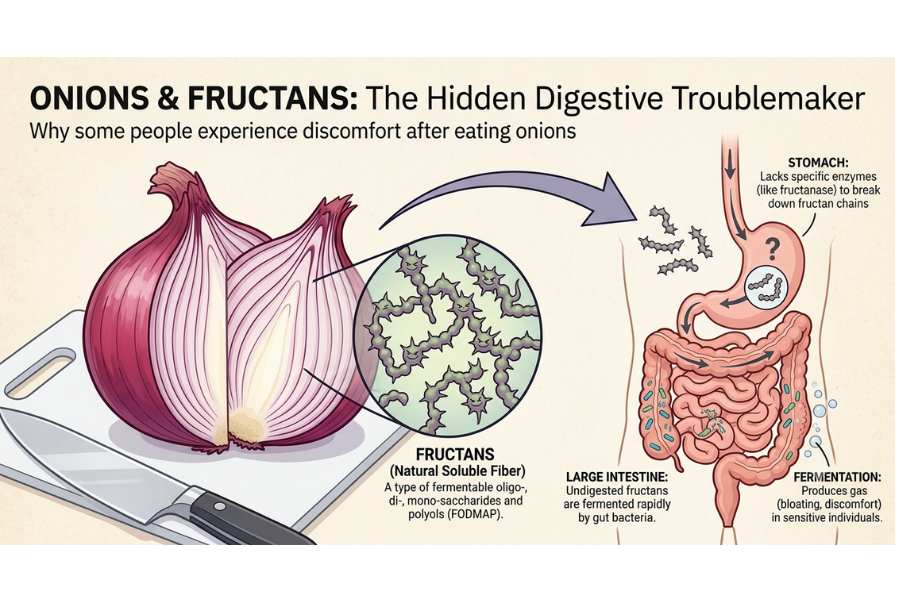
Because onions are cooked into so many meals, they are one of the most common secret triggers making your belly swell up without you even realizing it.
9. Garlic
Just like onions, garlic is a huge favorite in cooking, and it belongs to the exact same botanical family. This means garlic is also packed tight with those tricky fructans. Even though you usually only eat a tiny clove or a sprinkle of garlic powder, it is incredibly powerful.
For people with sensitive guts, even a microscopic amount of garlic can kickstart a massive gas reaction in the intestines.
10. Apples
Apples are a super juicy, crunchy snack, but they can be surprisingly tough on your belly. They contain a high amount of a natural fruit sugar called fructose, along with lots of tough fiber in the skin.
When your body gets a big dose of fructose all at once, it can struggle to absorb it all. The leftover sugar travels down to your gut bacteria, who quickly turn it into trapped air.
11. Pears
Pears are sweet, soft, and delicious, but they carry the exact same double-whammy as apples: a lot of fiber and a high amount of fructose. Pears also contain a sugar alcohol called sorbitol.
Sorbitol acts like a magnet for water in your gut while being a favorite snack for your resident bacteria, which can leave you feeling both heavy with water retention and full of gas bubbles.
12. Watermelon
Watermelon is the ultimate refreshing summer treat, but it is a very common trigger for a sudden “food baby” belly. It is incredibly high in fructose. Because watermelon is mostly water and tastes so light, it is easy to eat several huge slices in one sitting.
That floods your system with a massive wave of fruit sugar that can sit in your stomach and start bubbling up.
13. Peaches
Peaches belong to a group called “stone fruits” (fruits with a big pit in the middle). These fruits are naturally loaded with sorbitol. Because your body digests sorbitol incredibly slowly, a juicy peach can put the brakes on your digestive waterslide.
As the fruit sits there moving slowly, it gives your gut bacteria plenty of time to create a bloated, stretched-out feeling.
14. Dairy Products
Dairy includes anything made from animal milk, and it is one of the biggest bloating culprits in the entire world.
Lactose intolerance
The reason dairy causes so much trouble is a specific milk sugar called lactose. To break down this sugar, your body needs a special pair of chemical scissors called the lactase enzyme.
Millions of people naturally stop making enough of these scissors as they grow up. When you don’t have enough scissors to snip the milk sugar apart, it is called lactose intolerance.
Milk, cheese, ice cream
When you drink a glass of milk, eat a slice of cheese, or enjoy a bowl of ice cream, that unbroken lactose travels straight into your lower intestines.
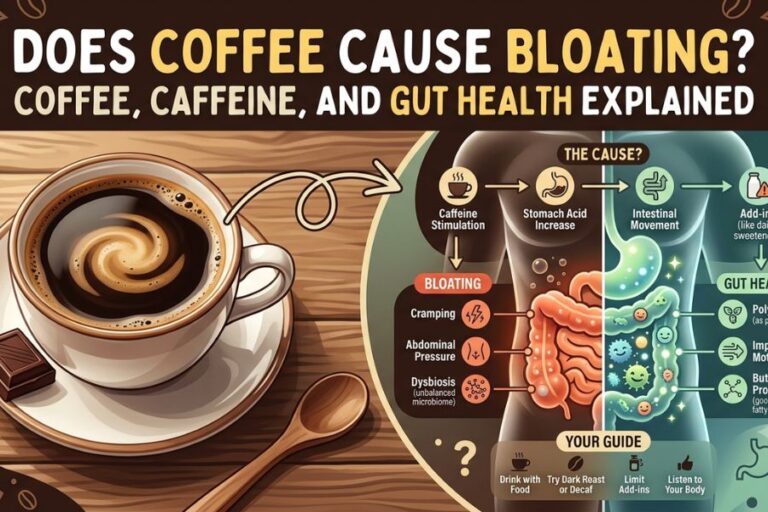
Also Read: Coffee, Caffeine, and Gut Health Explained
Because it hasn’t been split up, it draws extra water into your bowels (making you feel heavy and swollen) while your gut bacteria throw a massive feast, creating rapid gas, loud stomach noises, and lots of bloating.
15. Yogurt (For Some People)
Yogurt is a bit of a trickster. On one hand, it is full of “probiotics”—which are friendly, helpful bacteria that are great for your health. On the other hand, because it is made from milk, it still contains lactose.
If your body is super sensitive to milk sugars, even the good bacteria in yogurt might not stop your belly from inflating like a balloon.
16. Wheat
Wheat is the main ingredient in everyday foods like bread, pasta, pizza crusts, and cereal. It causes bloating for two reasons.
First, it contains gluten, a protein that can make the stomach feel heavy and sluggish.
Second, wheat is full of those sneaky fructans (the same tough sugars we found in onions and garlic).
Because we eat wheat at almost every meal, it is a major cause of that constant, baseline belly tightness.
17. Rye
Rye is a dark, heavy grain often used to make dense breads and crackers. Just like wheat, rye is packed with both gluten and a high amount of soluble fiber and fructans.
Because rye bread is so thick and dense, it takes a long time to travel down your digestive waterslide.
As it sits there moving slowly, your gut bacteria have a field day breaking it down, creating a lot of trapped air.
18. Barley
Barley is a chewy grain you often find floating in hearty soups or stews. While it is incredibly good for your heart, it is a double-threat for bloating.
It contains gluten, and it is absolutely loaded with a type of fiber called beta-glucans. This fiber absorbs a ton of water in your belly and expands, which can leave you feeling stuffed, heavy, and seriously puffed up hours after eating.
19. Carbonated Drinks
This includes sodas, sparkling water, fizzy juices, and energy drinks. The secret enemy here is the bubbles themselves! Those fizzy bubbles are actually trapped carbon dioxide gas.
When you chug a bubbly drink, you are literally swallowing giant pockets of air straight into your stomach. It is like blowing up a balloon inside your belly from the very first sip.
20. Beer
People often talk about getting a “beer belly,” and there is a very immediate reason for that! Beer is a triple-threat when it comes to bloating.
It is carbonated (full of fizzy bubbles), it is brewed from grains like barley or wheat (which means it contains gluten), and it is made using fermented yeast.
All of those things combined create a perfect storm of extra gas and water retention.
21. Artificial Sweeteners
Artificial sweeteners and sugar substitutes are used to make things taste sweet without adding actual sugar calories. You find them in “diet,” “zero-sugar,” and “light” versions of your favorite treats.
Sorbitol
Sorbitol is a type of sugar alcohol found naturally in some fruits, but scientists also make it in labs to sweeten diet foods.
The big problem with sorbitol is that your small intestine cannot absorb it efficiently. Because it travels slowly through your gut, it acts like a magnet for water, which makes your stomach feel incredibly heavy and sloshy.
Mannitol
Mannitol is another common sugar alcohol. Just like sorbitol, your body struggles to break it down. When mannitol arrives untouched in your lower belly, your gut bacteria quickly attack it and throw a massive digestion party.
This process creates a sudden wave of trapped gas bubbles that can make your waistband feel tight in a matter of minutes.
Xylitol
Xylitol is famous for being used in low-calorie foods and toothpastes because it is great for your teeth. However, it is not so great for a quiet stomach.
If you consume too much xylitol, your gut bacteria ferment it at lightning speed, creating a ton of rapid gas, loud stomach gurgling, and a very uncomfortable balloon-belly feeling.
22. Sugar-Free Gum
Sugar-free gum is a double-whammy for bloating because it combines two major triggers at the exact same time.
First, it is almost always packed with those gas-creating sugar alcohols like xylitol or sorbitol. Second, the very act of chewing gum forces you to constantly swallow tiny pockets of outside air.
That swallowed air goes straight to your stomach, while the fake sugars feed your gut bacteria, inflating the balloon from both ends!
23. Processed Foods High in Sodium
This category includes packaged foods like potato chips, boxed mac-and-cheese, instant ramen noodles, and canned soups. The hidden enemy here is sodium, which is the scientific word for salt.
Salt doesn’t actually cause gas bubbles, but it does something else: it acts like a giant sponge inside your body. When you eat a lot of salty, processed snacks, the sodium tricks your body into holding onto extra fluids instead of flushing them out.
This is called water retention, and it makes your entire stomach area look and feel puffy, heavy, and swollen.
24. Fried Foods
Fried foods include things like french fries, chicken tenders, onion rings, and donuts. These foods are cooked by dunking them in giant vats of hot oil, which means they are completely loaded with heavy fats.
Fats are very complicated for your body to process, so they put the absolute brakes on your digestive system. Instead of moving smoothly down the waterslide, fried foods sit in your stomach like a heavy brick, slowing everything else down.
The longer that food sits there stalling the line, the more stuffed and uncomfortably bloated you feel.
25. High-Fat Fast Foods
Think of greasy burgers, cheesy pizzas, and oily takeout containers. These fast-food favorites combine two of the worst bloating triggers on the planet: a massive mountain of salt and a ton of heavy fat.
When you eat high-fat fast foods, the fat slows your digestion to a crawl, keeping the food trapped in your belly for hours.
At the exact same time, the high amount of salt forces your body to retain water. This combination creates a perfect storm where you feel completely stuffed, heavy with water weight, and painfully bloated long after your meal is over.
Surprising Foods That Cause Bloat
Sometimes, you can be eating what feels like the healthiest diet in the world, and your belly still turns into an inflated balloon.
It can be incredibly frustrating! You think you are doing everything right, but your stomach is completely miserable.
That is because a lot of modern “health foods” and innocent-looking snacks carry hidden ingredients that act like secret gas-makers.
Let’s look at some of the most surprising items that might be secretly inflating your belly.
Protein Powders
Protein shakes are super popular for quick breakfasts or after a workout, but they are a very common cause of sudden bloating.
Many protein powders are made from whey, which is derived from milk. If your body struggles even a little bit with dairy, whey can kickstart immediate gas.
Even if you use a plant-based powder, many brands use “protein isolates” from peas or soy that are highly concentrated and tough for a sensitive stomach to break down.
To make matters worse, companies often load these powders with artificial sweeteners and extra fibers to make them taste good without adding sugar, creating a perfect storm for a swollen belly.
Sugar-Free Products
You might grab a “zero-sugar” chocolate bar, a diet snack, or a low-calorie ice cream thinking it’s a smart choice. But as we learned with the 25 triggers, “sugar-free” usually means the food is packed with sugar alcohols like sorbitol, mannitol, or xylitol.
Because these fake sugars bypass normal digestion and go straight to your gut bacteria, even a tiny “diet” treat can leave you with a stomach that feels twice its normal size.
Energy Bars
Protein bars, granola bars, and fiber bars look like the ultimate convenient health snack. However, if you read the back of the wrapper, you will often see ingredients like inulin or chicory root fiber.
These are highly concentrated, manufactured fibers added to bars to boost their health stats. While fiber is generally good, these specific types are basically super-foods for your gut bacteria.
When you bite into an energy bar, you are essentially sending a massive, instant feast down to your gut crew, causing them to produce rapid gas bubbles.
Sparkling Water
It is easy to think that sparkling water or seltzer is perfectly safe because it has zero calories and no artificial ingredients. It’s just water, right? Well, yes but it’s water packed with carbonation. Those crisp, refreshing bubbles are actually trapped carbon dioxide gas.
When you chug a cold sparkling water, you are literally pouring gas straight into your stomach. If you are already prone to bloating, that extra air gets trapped in your digestive tract and stretches your belly muscles out.
“Healthy” Smoothies
A giant green smoothie packed with spinach, kale, apples, and bananas looks like health in a glass. But smoothies can trick your belly in two ways.
First, because everything is blended up, it is very easy to consume a massive amount of fruits and veggies in just a few minutes way more than you could ever eat if you had to chew them one by one.
This floods your stomach with a huge wave of fructose (fruit sugar) and raw fiber all at once. Second, when you drink a smoothie quickly through a straw, you swallow a lot of outside air, which pairs with the heavy sugars to create an instantly puffy stomach.
Wrapping It All Up
Dealing with a bloated, balloon-like belly can be incredibly frustrating, but as we’ve seen, your stomach isn’t just acting out for no reason.
Whether it’s a giant plate of beans fueling your gut bacteria, hidden sugars in a diet snack, or simply swallowing too much air while rushing through lunch, there is always a scientific explanation for that tight, uncomfortable feeling.
The great news is that once you know who the sneaky belly-inflation culprits are, you have the power to take control. By making simple food swaps, paying attention to how your unique body reacts, and slowing down during meals, you can help your digestive waterslide run much more smoothly.
Remember, occasional bloating happens to absolutely everyone. But if your belly is constantly miserable or causing you pain, never hesitate to check in with a doctor to make sure your gut crew is happy and healthy. Here’s to a happier, lighter, and much more comfortable belly!

2 Comments