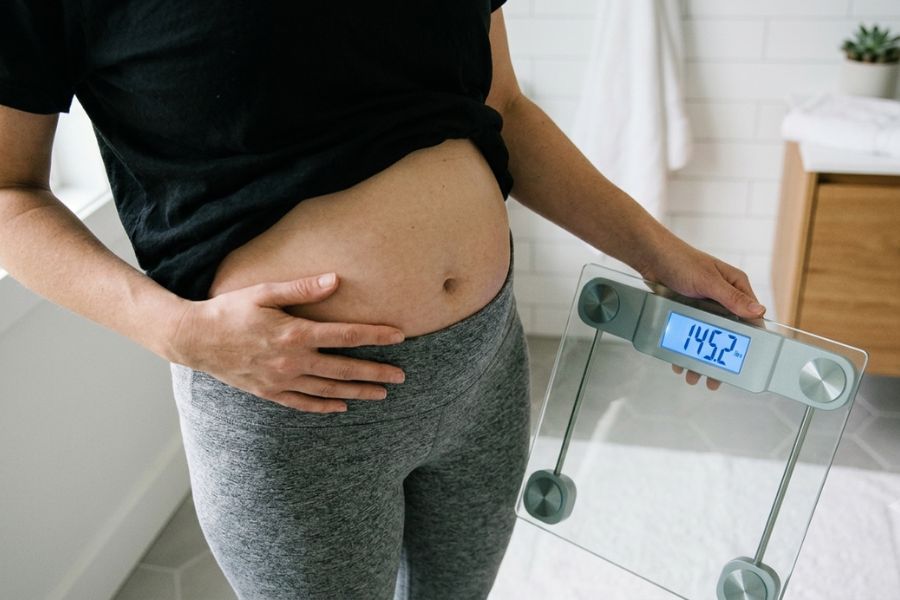
Can Bloating Cause Weight Gain? What the Scale Is Really Showing
If you’ve ever stepped on the scale after a rough digestive day and watched the number jump by three pounds overnight, I know exactly how frustrating that feels. It is so easy to panic and assume all your hard work just went out the window.
But here is the reassuring truth: bloating can absolutely make the scale go up temporarily, but it is almost never actual fat gain.
When your weight spikes over the course of 24 to 48 hours, you aren’t suddenly building new fat tissue. Instead, your body is dealing with a temporary internal shift. To understand what is really going on behind that morning weigh-in, we have to separate three entirely different things:
- Bloating: This is primarily trapped gas or digestive buildup inside your gastrointestinal tract. It distends your stomach and makes your belly feel physically tight and full, but gas itself doesn’t actually add heavy mass to the scale.
- Water Retention: This is where that sudden weight jump actually comes from. When your gut is irritated, inflamed, or working overtime to digest certain foods, your body naturally holds onto extra fluid. A high-sodium dinner or normal hormonal shifts can easily cause your tissues to store a few pounds of water weight overnight.
- Body Fat: Real fat gain requires a sustained, long-term caloric surplus. It takes time for the body to synthesize and store new adipose tissue – it is physically impossible to gain two pounds of pure body fat in a single day.
The Short Answer: If your stomach looks rounded and the scale is up, you are looking at a combination of temporary GI distress and the water retention that tags along with it.
In this article, I’m breaking down exactly why your body holds onto this phantom weight, how to easily spot the difference between fluid shifts and actual changes in your body composition, and the practical, science-backed steps I use to clear the bloat and get the scale back to normal.
Why the Scale Goes Up When You’re Bloated
When I see a sudden spike on the scale, my mind used to immediately jump to the worst-case scenario. But over time, I’ve learned to look at the data objectively. If your scale goes up while you’re feeling bloated, it isn’t a mystery, it’s just biology.
There are three main culprits behind this phantom weight gain, and none of them involve actual fat.
Water Retention
This is the most common reason the numbers climb overnight. Your body is incredibly protective of its fluid balance, and it will hold onto water at the slightest trigger.
- The Sodium Spike: We’ve all been there a high-sodium dinner leaves us waking up with puffy fingers and a tighter waistband. When I consume more salt than usual, my body temporarily holds onto extra water to dilute that sodium and keep things balanced. It can easily add 2 to 4 pounds on the scale, which vanishes once fluid balance restores.
- Hormonal Fluctuations & The Menstrual Cycle: For anyone tracking their cycle, this is a highly predictable pattern. In the days leading up to a period, progesterone and estrogen shifts signal tissues to retain fluid. I always remind myself that weight typically peaks right around the first day of bleeding and naturally drops back down shortly after. It is entirely fluid, not fat.
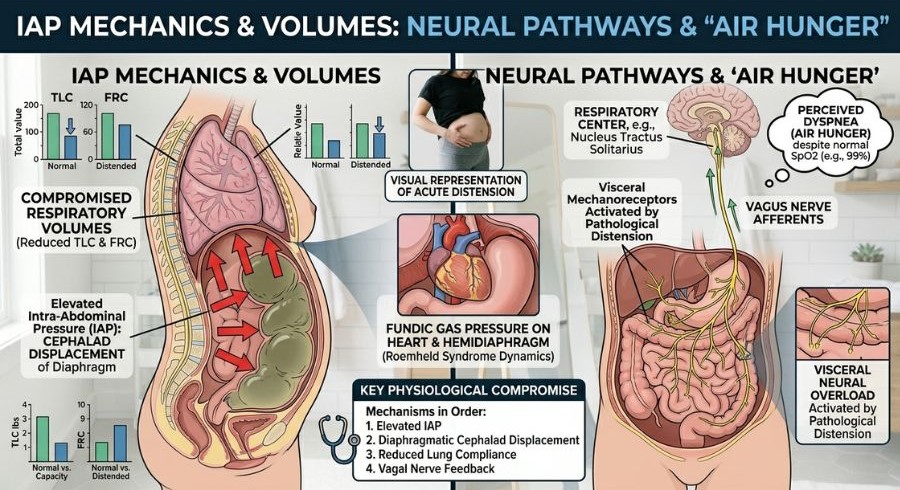
Trapped Gas in the Digestive Tract
Trapped gas is the primary reason your stomach physically expands, transforming from flat to noticeably distended in a matter of hours.
- How Gas Expands the Abdomen: When digestion stalls or you react to a specific food, gas builds up in the GI tract. This expands the intestines like a balloon, pushing the abdominal wall outward and making clothes feel tight.
- Temporary Weight Fluctuations: While gas itself is literally lighter than air and doesn’t add physical mass to the scale, the distension causes localized irritation. The body often responds to this digestive distress by drawing water to the gut, causing a temporary scale jump alongside that heavy, stretched-out feeling.
Constipation and Digestive Slowdown
If things aren’t moving through your system at a normal pace, the scale is going to reflect that internal backlog.
- Extra Stool Volume: It’s simple physics. If you haven’t had a bowel movement in a day or two, the physical weight of undigested food and accumulated stool is sitting inside your colon. That backup has actual weight, and it will show up when you step on the scale.
- Feeling Heavier Despite No Fat Gain: This is where that intense feeling of sluggishness comes from. You feel physically heavier because you are temporarily carrying extra mass—but it is waste matter, not adipose tissue. The second your digestive tract clears, that sudden “weight gain” completely disappears.
Does Bloating Cause You to Gain Weight or Just Feel Heavier?
When my jeans feel uncomfortably tight and my stomach feels like a stretched-out balloon, it is incredibly hard not to equate that intense physical discomfort with actual weight gain. It naturally leaves you wondering: does bloating cause you to gain weight, or are you just feeling heavier?
The truth is that bloating makes you feel incredibly heavy and can temporarily inflate the number on the scale, but it does not cause true, permanent weight gain in the form of body fat.
To help put your mind at ease, it helps to look at the stark contrast between what it actually takes for the body to store fat versus how quickly a bloat sets in:
The Calorie Surplus Requirement: True fat gain doesn’t happen by accident overnight. It is a slow, metabolic process that requires a sustained caloric surplus over time.
To gain just one single pound of actual body fat, you have to consume roughly 3,500 calories above what your body burns for energy.
Unless you ate a massive, multi-thousand-calorie feast the night before, your body physically cannot build new adipose tissue by morning.
The “Overnight Spike” Example: If you step on the scale and notice you are 2 to 5 pounds heavier than you were yesterday, I can assure you that it is just water or digestive contents.
Real fat gain happens much more gradually, ticking up slowly over weeks of consistent overeating, whereas fluid and waste can shift dramatically from one day to the next.
The Takeaway: There is a massive difference between feeling physically heavy and gaining fat. Bloating distends your abdomen and forces your body to hold onto temporary fluid, creating a sluggish, heavy sensation. But rest assured, because it isn’t fat, that phantom weight will vanish just as quickly as it appeared once your digestion settles.
Bloating vs. Fat Gain: How to Tell the Difference
When I’m staring at the mirror trying to figure out if I’ve actually gained weight or if my gut is just throwing a temporary tantrum, I look for a few distinct clues. It can be hard to think rationally when you’re feeling uncomfortable, but your body leaves very specific signs that reveal exactly what is going on behind the scenes.
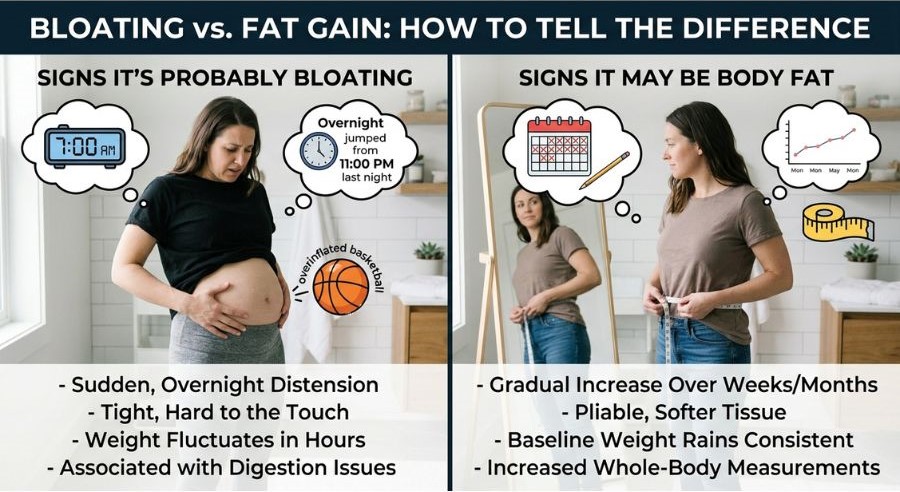
Here is the mental checklist I use to separate temporary digestive drama from true changes in body composition.
Signs It’s Probably Bloating
If you are dealing with fluid shifts or trapped gas, the symptoms tend to be dramatic, sudden, and highly localized to your stomach.
- Sudden Weight Increase: The change happens almost instantly. If I step on the scale and I am suddenly two or three pounds heavier than I was 24 hours ago, I know it is physically impossible for that to be fat.
- A Tight, Hard Stomach: When I press on my abdomen during a bloat, it feels physically firm, stretched, and tight—almost like an overinflated basketball. Body fat, on the other hand, is soft and pliable.
- Excess Gas and GI Symptoms: If the scale jump is accompanied by obvious digestive distress—like a gurgling stomach, frequent belching, or flatulence your GI tract is simply working through trapped air and irritation.
- Weight Fluctuates Throughout the Day: This is the ultimate giveaway. If I wake up with a relatively flat stomach but end the day looking and feeling noticeably heavier, that daily volatility is a classic sign of food digestion, gas production, and fluid shifting.
Signs It May Be Body Fat
True weight gain in the form of adipose tissue behaves very differently. It is a slow, steady process that doesn’t care about your digestive cycle.
- Gradual Increase Over Weeks: You won’t wake up one morning and suddenly have a pound of new fat. If it’s actual body composition changing, I’ll notice the scale creeping up slowly and steadily over the course of several weeks or months.
- Consistent Weight Gain: The higher number stays put. Your weight won’t magically drop back down by three pounds after a good night’s sleep, a workout, or a clean eating day. The new baseline remains stable day after day, regardless of your digestion.
- Increased Body Measurements: It isn’t just a localized, tight feeling in the lower stomach. When I am gaining actual fat, I notice a gradual change in how my clothes fit across my entire body—including my hips, thighs, chest, and back and my tape measurements consistently tick upward over time.
Common Causes of Bloating That Make You Feel Like You’ve Gained Weight
Whenever I find myself tracking a sudden shift in how my clothes fit, I try to look back at the previous 24 to 48 hours. More often than not, I can pinpoint a specific trigger that set off my digestive tract.
Many everyday habits and biological shifts can spark sudden bloating, leaving you feeling like you’ve overnighted a few pounds of actual weight. Here are the most common culprits I encounter.
Eating Too Fast
When I’m busy and rushing through a meal, I’m not just inhaling my food I’m quite literally inhaling air.
Eating too quickly causes us to swallow large pockets of oxygen and nitrogen (a habit known as aerophagia).
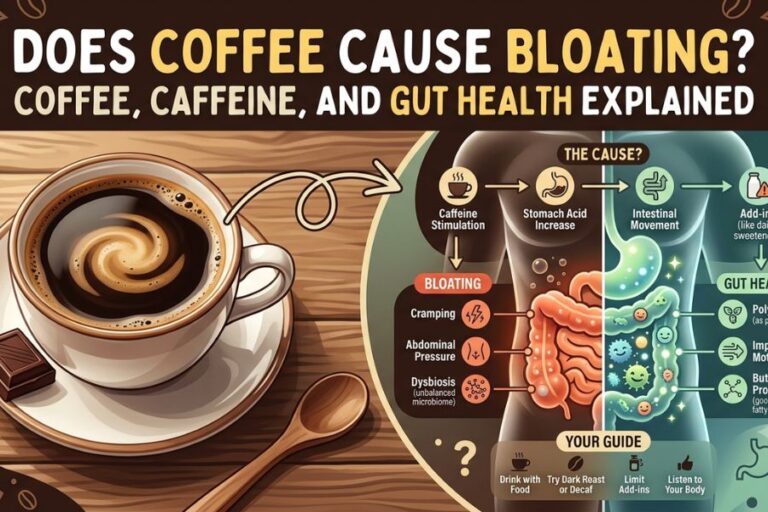
Also Read: Does Coffee Cause Bloating?
Before the food even hits the lower digestive tract, that trapped air fills up the stomach, creating an instant, uncomfortable balloon effect that makes a waistband feel immediately tighter.
Carbonated Drinks
I love a crisp sparkling water, but I always have to remind myself of the physical tax that comes with it. Carbonated beverages are infused with carbon dioxide gas.
When you drink them, that gas has to go somewhere. It trapped inside your stomach and intestines, rapidly expanding your abdominal cavity. If you drink bubbles throughout the day, that continuous expansion can easily make you feel heavy and distended by evening.
High-Sodium Foods
Sodium is a master manipulator of the scale. When I indulge in a heavily salted restaurant dinner or processed snacks, my body’s immediate survival response is to hold onto extra fluid to keep my electrolyte ratios balanced.
This doesn’t just cause a puffy face or swollen fingers; it causes global fluid retention that sits heavy in your tissues, easily driving the scale up a few pounds by the next morning.
Food Intolerances
We all have unique triggers whether it’s dairy (lactose), gluten, or certain high-FODMAP foods like garlic and onions. When my digestive system lacks the proper enzymes to fully break these compounds down, they arrive in the large intestine mostly intact.
The resident gut bacteria then go to town fermenting them, which produces massive amounts of localized gas, cramping, and severe distension.
Menstrual Hormonal Changes
This is a monthly reality that can completely skew your tracking data if you aren’t prepared for it. In the week leading up to a period, progesterone levels spike and then plummet, while estrogen fluctuates.
These shifts signal your body to retain extra cellular fluid. To make matters worse, these same hormones slow down your overall GI motility, creating a double-whammy of slower digestion and physical water weight.
Digestive Disorders
Sometimes, chronic bloating isn’t just a temporary reaction to a salty meal or a rushed lunch. Conditions like Irritable Bowel Syndrome (IBS), Small Intestinal Bacterial Overgrowth (SIBO), or chronic sluggish motility mean the gut is fundamentally struggling to process gas and move waste. For anyone dealing with these underlying imbalances, the feeling of phantom weight gain can be an exhausting, daily battle rather than a rare occurrence.
Can Bloating Cause Shortness of Breath?
The first time I experienced a truly severe bout of digestive distress, I noticed a symptom that honestly panicked me: I couldn’t seem to catch a full breath. It felt like my lungs were hitting a hard ceiling.
It is a terrifying sensation, and it immediately makes you wonder: can bloating cause shortness of breath, or is something much more serious going on?
The reassuring answer is yes, intense abdominal bloating can absolutely affect your breathing, and it comes down to a simple issue of internal real estate.
When your stomach and intestines fill with trapped gas or stagnant waste, they physically expand and take up more space in your abdominal cavity. Because your torso has limited room, that distended digestive tract starts pushing upward against your diaphragm the large, dome-shaped muscle right below your lungs that handles your breathing.
When your diaphragm is pinned or crowded by an overinflated gut, it cannot drop down fully when you inhale, meaning your lungs cannot expand to their maximum capacity.
Symptoms That Tag Along With Digestive Breathlessness
When your breathlessness is mechanically caused by a crowded diaphragm, it usually brings a very specific cluster of secondary symptoms with it:
- Feeling Unable to Take a Deep Breath: You might feel like your breathing is shallow or that you have to consciously force a deep inhale, only to feel a physical restriction stopping you.
- Chest or Upper Abdominal Tightness: The upward pressure can mimic a heavy, tight sensation right at the base of your rib cage or the lower part of your chest.
- Intense Fullness After Meals: This is especially common if you have eaten too quickly or consumed a large volume of food. The sensation of being “stuffed to the brim” directly triggers that shallow, uncomfortable breathing pattern.
When to Seek Medical Attention
While it is common for a bloated belly to cause temporary, mechanical breathing restrictions, shortness of breath is a symptom you should never take lightly or dismiss blindly. It is crucial to separate temporary GI distress from a potential cardiovascular or respiratory emergency.
Red Flags: If your shortness of breath is accompanied by sudden chest pain, pain radiating down your arm or up into your jaw, dizziness, sweating, or if the breathlessness persists even after your bloating goes down, you need to seek immediate medical attention.
However, if it only happens when your stomach is visibly distended and fades away completely as your digestion settles, you are likely just dealing with a very crowded diaphragm.
How to Reduce Bloating and Get Back to Your Normal Weight
When I am dealing with a sudden bout of bloating and a frustrating spike on the scale, I don’t panic. Instead, I shift my focus entirely toward actionable strategies that support my digestive system and help my body shed excess fluid.
If you want to clear the distension, relieve the internal pressure, and see your true weight reflected on the scale again, here is the exact protocol I rely on to get things moving.
Drink More Water
It sounds completely counterintuitive to drink more fluid when you are already feeling heavy and water-logged, but it is one of the fastest ways to break the cycle.
When I don’t drink enough water, my body shifts into a protective conservation mode, holding onto every drop it has.
By consistently sipping water throughout the day, I signal to my kidneys that it is safe to release that tightly held fluid, which naturally flushes out excess sodium and brings the scale back down.
Walk After Meals
My absolute go-to remedy after eating a heavy meal is a simple, 10-to-15-minute gentle walk. Sitting on the couch right after eating allows gas to pool and settle in the digestive tract.
Light walking acts as a mechanical pump for your gut; the gentle movement stimulates peristalsis the wave-like muscle contractions of your intestines helping to break up trapped air bubbles and advance food through the system much faster.
Reduce Excess Sodium
If my morning weigh-in reveals a sudden, unexplainable weight jump, I immediately audit my recent salt intake. To reverse a sodium-driven fluid spike, I clean up my meals for the next 24 to 48 hours by skipping heavily processed snacks, restaurant takeout, and hidden salt bombs like commercial dressings.
Replacing them with whole, single-ingredient foods gives the body a chance to shed that temporary fluid weight overnight.
Increase Fiber Gradually
While fiber is essential for long-term digestive health, dumping a massive amount of fiber into your diet all at once is a recipe for severe bloating and gas. Whenever I am trying to increase my fiber intake, I take a slow and steady approach.
Adding too much bulk before your gut microbiome adapts will only stall your digestion further. I aim to add just a few grams a day through gentle sources like cooked vegetables or chia seeds, giving my system plenty of time to adjust.
Identify Trigger Foods
We all have unique dietary sensitivities, and tracking patterns is key to finding yours. When I notice a specific meal consistently leaves me looking distended or feeling uncomfortably full, I make a mental note of the ingredients.
Common culprits usually include dairy (lactose), wheat (gluten), or high-FODMAP foods like garlic, onions, and beans. Identifying and temporarily removing these personal triggers can completely eliminate recurring, painful bloat.
Manage Constipation
If waste is sitting stagnant in your colon, no amount of water-flushing will fully solve the problem. Keeping things regular is non-negotiable for keeping the scale stable. I focus on combining adequate hydration with magnesium-rich foods or supplements, healthy fats, and a consistent routine to ensure my digestive tract clears daily.
Removing that physical backlog doesn’t just instantly flatten your stomach; it physically removes the temporary weight of accumulated waste from the scale.
When Bloating May Signal a Medical Problem
While I always try to stay rational when the scale jumps around, I also know there is a distinct point where we have to stop blaming a salty dinner and take things seriously.
Bloating is usually just a temporary annoyance, but it can also be a clear warning sign from your body. Here is exactly what I look out for when deciding if a bloat has crossed the line into a real medical issue.
If your stomach stays continuously distended day after day and refuses to budge no matter how much you rest or change your diet, that constant baseline persistence means you need to get a doctor’s opinion.
The same rule applies to pain. If you are dealing with sharp, debilitating cramps that double you over, wake you up at night, or hurt when you physically press on your stomach, please don’t try to tough it out. That isn’t simple gas; it could be a sign of severe inflammation or an intestinal obstruction.
There are also a few absolute red flags that mean you should skip the home remedies entirely. If you feel perpetually full and bloated but notice you are actually losing weight without trying, that is a major physiological paradox that requires an immediate medical workup.
You also need to see a professional straight away if you ever notice blood in your stool, or if your shortness of breath becomes a constant issue, happens when you aren’t even bloated, or tags along with chest tightness and dizziness.
At the end of the day, you have to trust your intuition. If your symptoms are steadily getting worse, or if you start running a fever, vomiting, or simply can’t keep food down, stop trying to fix it yourself and get a healthcare professional in your corner.
We can easily handle a temporary fluid spike on our own, but when your body sounds a real alarm, it is time to listen.
Summary
At the end of the day, I always remind myself that a bloated belly and a sudden scale spike are incredibly deceptive. When my jeans suddenly feel way too tight, it is so easy to panic, but the reality is that this overnight weight jump is just a mix of trapped gas, fluid retention, or a temporary digestive backlog. It has absolutely nothing to do with actual body fat.
That’s why I’ve learned to stop letting daily scale fluctuations dictate my mood, and I always tell others to do the same.
One heavy meal or a rough digestive day shouldn’t ruin your peace of mind. Instead of obsessing over morning-to-morning data, I prefer to focus on long-term trends over weeks and months to see what my body composition is truly doing.
Of course, if that heavy, distended feeling refuses to budge or brings along any of the concerning symptoms we just went over, please don’t hesitate to check in with a doctor.
But for a standard, everyday bloat? Take a deep breath, drink some water, go for a short walk, and trust the process. Your body will find its balance again, and that scale will be back to normal before you know it.

One Comment