15 Trigger Foods to Avoid With IBS That Can Make Your Symptoms Worse
Have you ever wondered why eating a slice of pizza or an apple makes your stomach feel completely fine one day, but turns it into a rumbling, grumbling mess the next? If you have IBS, it can feel like your gut is playing a guessing game. Let’s look inside and see what’s actually going on.
Think of your digestive system as a long, smooth water slide. When you eat, the muscles in your stomach and intestines squeeze in a gentle, rhythmic wave almost like an accordion to push food along.
But when you have IBS, those muscles get out of sync. Sometimes, they squeeze way too fast. When that happens, food flies through the slide before your body can absorb the water from it, leading to diarrhea.
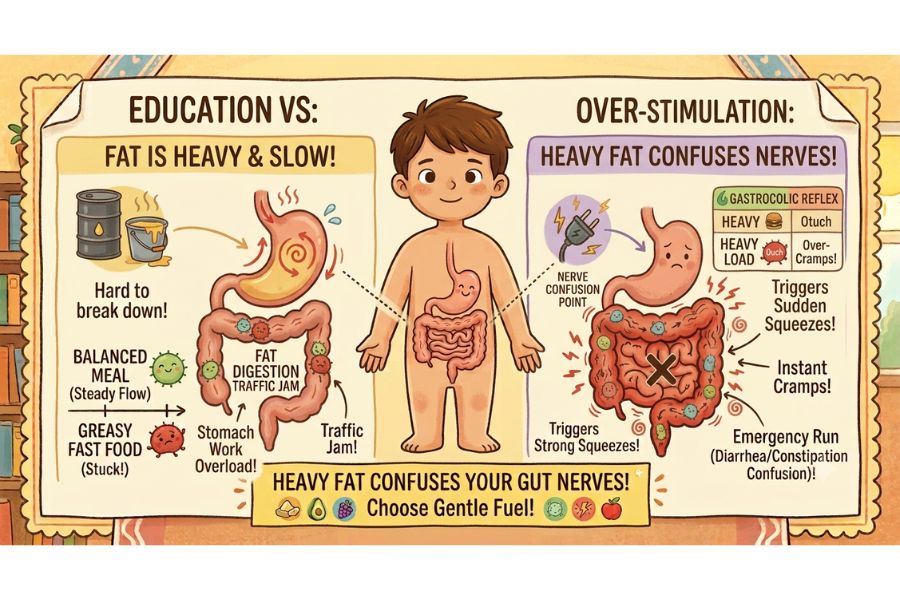
Other times, the muscles get super lazy and slow down, which causes everything to back up, leading to constipation.
Your gut is lined with millions of tiny nerves. It has so many nerves, in fact, that scientists call it your “second brain”! In a regular gut, these nerves just do their job quietly in the background.
But if you have IBS, your gut nerves are hyper-sensitive. They act like an over-enthusiastic car alarm that goes off if a leaf drops on the windshield. When food stretches your intestines or creates a tiny bit of normal gas, your extra-sensitive nerves scream “Danger!” to your brain.
Your brain then reacts by giving you cramps, bloating, or pain. The food itself isn’t dangerous; your nerves are just overreacting to it.
Meet the FODMAPs (The Ultimate Gas Makers)
There is a specific group of carbohydrates (sugars and fibers) found in everyday foods that are notoriously famous for triggering IBS. Scientists call them FODMAPs.
FODMAP stands for a big, complicated scientific name, but all you need to know is that they are hard for some guts to digest. Instead of being absorbed smoothly, they sit in your intestines and draw in extra water.
Then, the friendly bacteria living in your gut throw a massive party eating these leftovers. As the bacteria feast, they produce a ton of gas. For a hyper-sensitive IBS gut, that extra gas and water feel like a balloon inflating inside your belly.
Foods high in FODMAPs include things you might love, like:
- Garlic and onions
- Apples and watermelons
- Milk and ice cream
- Wheat (like bread and pasta)
Why What Harms Me Might Not Harm You
Here’s the trickiest part about IBS: everyone’s gut is completely unique. There is no single “IBS diet” because our bodies are built differently.
You might have a friend with IBS who can eat hot sauce and broccoli all day without a single problem, but if they drink a glass of milk, they are stuck in the bathroom. Meanwhile, milk might be your safe food, but a single onion ring sets you off.
This happens because our gut bacteria profiles are different, our nerve sensitivity levels vary, and our bodies produce different amounts of digestive enzymes. Finding your triggers is a bit like being a detective you have to investigate your own body to find out exactly what makes your unique gut happy or mad.
15 Foods to Avoid With IBS
1. Onions
Onions add amazing flavor to everything from burgers to soups, but they are one of the biggest troublemakers for people with IBS. Even a tiny piece of cooked onion can cause a lot of stomach drama.
High in Fructans
The main reason onions hurt your belly is because they are packed with something called fructans. Fructans are a type of sugar chain that the human body naturally struggles to break down because we don’t have the right tools (enzymes) to digest them.
In a standard digestive system, unfed fructans move along without causing much noise. But in an IBS gut, they act like a magnet for water as they travel through your intestines, making everything expand.
Why They Cause Bloating
Once those undigested onions reach your lower intestine, your gut bacteria see them as a delicious, all-you-can-eat buffet. As the bacteria break down the fructans, they rapidly produce gas.
Because your gut nerves are extra sensitive, all that sudden gas fills your stomach up like a tightly blown balloon. This is why just a little bit of onion can leave you feeling incredibly bloated, gassy, and cramped a few hours after eating.
Better Alternatives
You don’t have to give up flavor just to keep your stomach happy! You can get that same savory kick using these safe swaps:
- The Green Part of Green Onions (Scallions): The white bulb of a green onion is full of fructans, but the green tops are completely safe and FODMAP-friendly. Chop them up and use them just like regular onions.
- Chives: These little green herbs belong to the same family but are much gentler on your digestive system.
- Garlic-Infused Oil: Fructans don’t dissolve in oil, but the flavor does! Cooking your food in garlic-infused olive oil gives you that rich, savory taste without any of the stomach pain.
2. Garlic
If onions are the king of IBS triggers, garlic is definitely the queen. It is used in almost every savory dish imaginable, making it one of the hardest foods to escape when you are trying to keep your stomach calm.
The Sneaky Hidden Sources
The toughest thing about garlic is how sneaky it is. You might think you’re safe if you don’t see big chunks of garlic in your food, but it hides everywhere! It is a main ingredient in store-bought pasta sauces, salad dressings, marinades, potato chips, and even frozen dinners.
When you are eating out at a restaurant, chefs almost always use garlic to flavor meats and veggies, which is why your stomach might hurt after a dinner out even if you ordered something that looked “plain.”
Garlic Powder vs. Fresh Garlic
You might wonder if using garlic powder from a shaker is safer than chopping up a fresh clove. Unfortunately, garlic powder is actually worse for an IBS gut!
Garlic powder is made by dehydrating fresh garlic and crushing it into a super-concentrated dust. Because all the water is removed, the troublemaking fructans are packed tightly together.
Just a tiny teaspoon of garlic powder can contain the same amount of belly-aching sugars as multiple fresh cloves, making it a major trigger for bloating and cramps.
The Magic Solution: Garlic-Infused Oil
Don’t worry, you don’t have to eat bland food forever! Science gives us a really cool loophole here: Garlic-infused olive oil.
The secret sugars (fructans) in garlic can dissolve in water, but they cannot dissolve in oil. This means if you cook fresh garlic cloves in olive oil, the delicious garlic flavor gets trapped in the oil, but the stomach-hurting sugars stay trapped inside the garlic piece.
As long as you strain out and throw away the actual pieces of garlic before cooking your meal, you get 100% of the amazing garlic taste with 0% of the IBS pain!
3. Beans and Lentils
Beans and lentils are super healthy, packed with protein, and great for your body—unless you have IBS. If you do, these little guys can quickly feel like tiny time bombs ticking away in your stomach.
High GOS Content
The reason beans and lentils are so tough on an IBS gut comes down to another big scientific word: GOS (which stands for Galacto-oligosaccharides).
GOS is just a fancy name for a specific type of complex sugar chain found in legumes. Humans actually lack the digestive tools needed to break down GOS in the upper part of our digestive system. That means whether you have IBS or not, beans travel all the way down to your lower gut completely intact.
Why They Cause Major Gas
Once the undigested beans and lentils reach your large intestine, your gut bacteria react like they just hit the jackpot. They start breaking down the GOS immediately through a process called fermentation.
Also Read: IBS and Back Pain: 8 Surprising Causes and Solutions
While this happens to everyone, the reaction is much more intense if you have IBS. Your bacteria produce a large amount of hydrogen and methane gas very quickly.
Because your gut nerves are hyper-sensitive, that sudden buildup of gas stretches your intestines, leading to sharp pains, loud stomach rumbling, and heavy bloating.
Portion Considerations (The Secret to Eating Them Safely)
Here is some good news: you don’t necessarily have to banish beans from your plate forever. It all depends on the type and the portion size.
- Canned is King: Canned lentils and canned chickpeas (garbanzo beans) are much safer than dried ones. Because they sit in water inside the can, the water-soluble GOS sugars actually leak out of the beans and into the liquid. If you rinse them really well under the faucet before eating, you wash a lot of the trouble right down the sink!
- Keep it Small: You can usually handle a small “safe amount” without a flare-up. For example, keeping your portion to just 1/4 cup of rinsed, canned chickpeas or 1/2 cup of canned lentils gives your bacteria a tiny snack instead of a massive feast, allowing you to enjoy the nutrients without the pain.
4. Wheat-Based Foods
From fluffy morning toast to a big bowl of spaghetti, wheat is everywhere. Sadly, it is also one of the most common everyday foods that can leave an IBS belly feeling incredibly uncomfortable.
Bread, Pasta, and Crackers
When you have IBS, standard wheat-based foods like white and whole-wheat bread, traditional pastas, and crunchy crackers can feel like heavy bricks in your stomach.
Within an hour or two of eating them, you might notice your stomach expanding, accompanied by that familiar, uncomfortable pressure and cramping.
When Gluten Isn’t Actually the Problem
If you have ever felt sick after eating a bowl of pasta, your first thought might have been, “Oh no, I must have a gluten allergy!”
But here is a fascinating secret: for most people with IBS, gluten isn’t the bad guy at all.
Gluten is a protein found in wheat. But what actually triggers IBS symptoms in wheat is a carbohydrate (a sugar) called fructan – the exact same troublemaker we found in onions and garlic! Because wheat is loaded with fructans, your gut bacteria ferment them and create excess gas, which hurts your sensitive nerves.
This is why people with IBS often feel much better when they switch to gluten-free bread or pasta. It’s not because their bodies can’t handle the gluten protein; it’s because removing the gluten accidentally removes the belly-aching fructan sugars, too!
Simple Swaps to Keep Eating Your Favorites
You don’t have to give up your favorite comfort foods. You just need to change the type of grain you use:
- Sourdough Bread: Traditional, slow-fermented sourdough bread is a fantastic option. The wild yeast and bacteria used to make the bread actually “eat” most of the fructans during the rising process before the bread even hits the oven. Your stomach gets a break because the bread is practically pre-digested!
- Gluten-Free Pasta & Crackers: Look for pasta and crackers made from alternative ingredients like rice, corn, or quinoa. They are naturally low in fructans and incredibly gentle on a sensitive stomach.
5. Dairy Products
Pouring a cold glass of milk, scooping up some ice cream on a hot day, or melting cheese over a dish are pure comfort – until your stomach starts protesting. For many people with IBS, dairy is a fast track to cramps and urgent bathroom trips.
Milk, Ice Cream, and Soft Cheese
The main troublemakers in the dairy aisle are liquid or creamy products like standard cow’s milk, ice cream, and soft cheeses (like ricotta, cottage cheese, or cream cheese). These specific dairy foods are packed with a natural sugar called lactose.
If your gut can’t break this sugar down quickly, it travels down your digestive slide completely whole, drawing in water and causing sudden, watery diarrhea or painful bloating.
Lactose Intolerance vs. IBS
It is easy to confuse lactose intolerance with IBS because they cause almost the exact same symptoms. However, they happen for two completely different reasons:
- Lactose Intolerance is a chemistry problem. Your body simply doesn’t make enough lactase, which is the specific enzyme tool needed to chop up lactose sugar into tiny pieces your body can absorb.
- IBS is a nerve and muscle problem.
Here is where it gets tricky: you can have both at the same time. If you have mild lactose intolerance, a little bit of milk might only cause a normal stomach a tiny bit of gas.
But if you have IBS, your hyper-sensitive nerves will feel that tiny bit of gas as severe pain, and your out-of-sync muscles might overreact by throwing a cramping tantrum.
Dairy Swaps That Still Taste Great
Giving up traditional dairy doesn’t mean giving up creamy treats. You have plenty of great options:
- Lactose-Free Dairy: You can buy real cow’s milk, ice cream, and cottage cheese that have had the lactase enzyme added to them. It tastes exactly the same, but the troublesome sugar is already broken down for you.
- Hard Cheeses: Good news for cheese lovers! Hard, aged cheeses like Cheddar, Parmesan, and Swiss are naturally very low in lactose because most of the sugar is removed during the cheese-making process. They are generally very safe for an IBS gut.
- Plant-Based Milks: Almond milk, oat milk, and macadamia milk are completely lactose-free and very gentle on a sensitive belly.
6. Fried and Greasy Foods
There is no denying that crispy French fries, golden fried chicken, and fast-food burgers taste amazing. But for a sensitive IBS stomach, heavy, greasy meals are like pouring fuel on a fire. They are among the fastest triggers for sudden stomach pain and emergency trips to the bathroom.
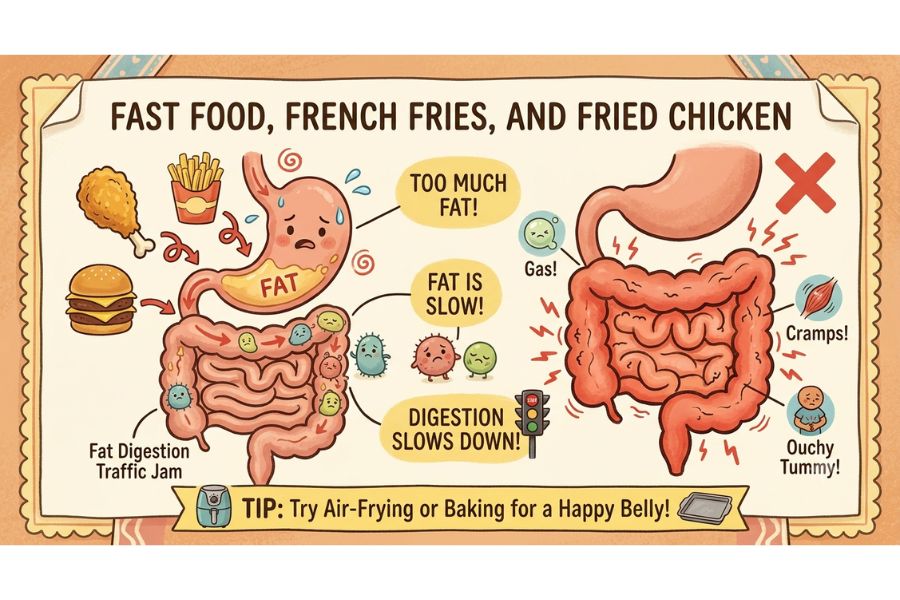
Fast Food, French Fries, and Fried Chicken
When foods are dropped into deep fryers or cooked in heavy oils, they soak up a massive amount of fat.
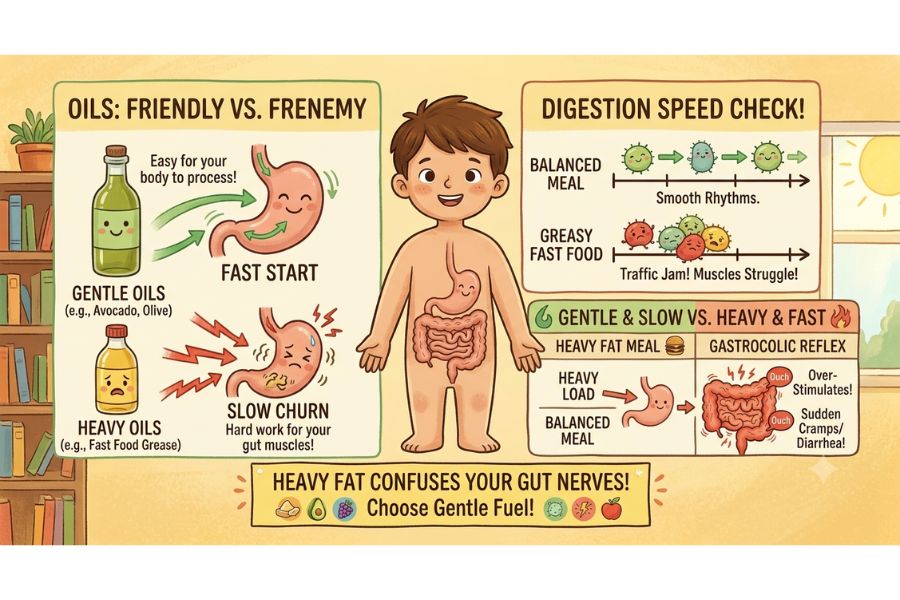
While healthy fats (like a drizzle of olive oil) are generally easy on your body, the heavy, saturated fats found in greasy fast foods are incredibly heavy and difficult for your digestive system to process all at once.
The Effect on Your Digestion
Fried foods trigger a major overreaction in your gut because of how fat interacts with your digestive muscles.
When you swallow something very greasy, your stomach signals your intestines to get ready for a heavy load. This triggers a natural reflex called the gastrocolic reflex, which tells your colon, “Hey, look alive! Food is coming, clear some space!”
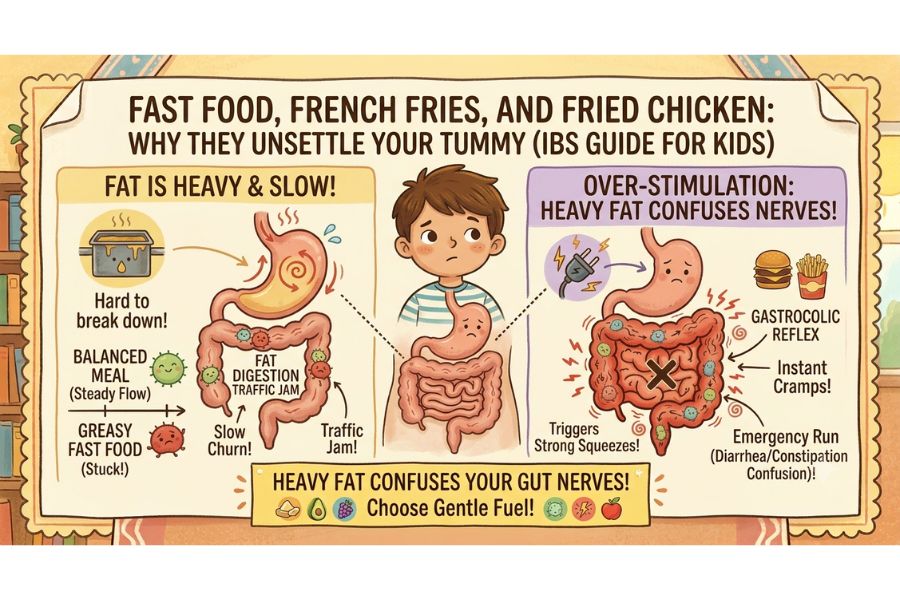
In a standard gut, this reflex is gentle. But in an IBS gut, high amounts of fat cause this reflex to go totally wild. Your intestinal muscles start squeezing and cramping violently.
To make matters worse, fat is very hard to break down. It can cause two opposite issues depending on your IBS type:
- The Fast Track (Diarrhea): The heavy fat causes your gut to flood itself with water and grease, speeding up your muscle waves and forcing everything out before it can be digested properly.
- The Traffic Jam (Constipation): For some people, a mountain of grease completely paralyzes the gut muscles, slowing digestion down to a painful crawl and causing heavy, trapped bloating.
Better Alternatives
You can still get that satisfying, crispy crunch without the greasy aftermath by changing how your food is cooked:
- Air Frying: Air fryers use super-hot air instead of a vat of oil to get your food crispy. You can make home-cooked French fries or chicken tenders with just a tiny spritz of oil, giving you the crunch without the cramping.
- Baking with Herbs: Tossing potatoes or chicken in a tiny bit of olive oil and baking them on a high heat in the oven creates a delicious crust that is much gentler on your digestive slide.
7. Spicy Foods
If you love adding a splash of hot sauce to your eggs or ordering your curry with extra heat, your taste buds might be happy, but your IBS gut might be crying for help. Spicy foods are notorious for causing an immediate flare-up.
Chili Peppers and Hot Sauce
The main culprits here are foods cooked with fresh chili peppers, cayenne pepper, flakes, or heavy hot sauces. Even spicy seasonings like chili powder can cause an issue.
While these ingredients bring the heat to your favorite dishes, they also bring a specific chemical compound that acts like an irritant to your digestive tract.
Capsaicin and IBS Symptoms
The secret ingredient that makes chili peppers spicy is a chemical called capsaicin.
When you eat something spicy, capsaicin binds to heat receptors on your tongue, telling your brain, “Wow, that’s hot!” But here is the thing: you have those exact same receptors all the way down your digestive tract and in your colon.
In a standard gut, capsaicin can cause a mild warm feeling. But remember, an IBS gut has hyper-sensitive nerves. When capsaicin hits a sensitive colon, it acts like a chemical trigger. It speeds up your intestinal muscles, causing them to cramp and squeeze violently.
This rapid squeezing pushes everything through too fast, often leading to sudden, painful diarrhea and a burning sensation that you definitely want to avoid.
Better Alternatives
You don’t have to eat bland, boring meals just to keep your stomach calm. You can still create rich, deeply flavorful dishes using gut-friendly spices that don’t contain capsaicin:
- Flavorful Herbs: Load up your dishes with fresh or dried herbs like cilantro, basil, oregano, rosemary, and thyme. They provide tons of flavor without any of the heat.
- Gentle Spices: Spices like cumin, coriander, turmeric, and smoked paprika add warmth, color, and a rich smoky flavor to your food without triggering that burning capsaicin reaction.
- Ginger: If you miss the “kick” of spicy food, try adding fresh ginger to your stir-fries or marinades. It adds a fresh, sharp flavor and is naturally soothing to a sensitive stomach!
8. Artificial Sweeteners
You might think switching to sugar-free foods is a healthy choice, but if you have IBS, “sugar-free” can actually be a major trap. Certain sweeteners are notorious for causing sudden, unexpected stomach trouble.
Sorbitol, Mannitol, and Xylitol
The specific sweeteners that trigger IBS belong to a family called sugar alcohols. You can easily spot them on ingredient labels because their names almost always end in “-tol,” like sorbitol, mannitol, xylitol, and maltitol.
Even though they have “sugar” and “alcohol” in their name, they aren’t actually either one! They are a unique type of carbohydrate that your small intestine simply cannot absorb properly. Because your body can’t pull them into your bloodstream, they travel all the way down to your large intestine completely whole.
Sugar-Free Gum and Candy
These sweeteners are most commonly found in sugar-free chewing gum, mints, gummy bears, and diet candies. They are also hidden in things like protein bars, cough drops, and “diet” or “light” ice creams.
Because they sit in your intestines undigested, they act like a sponge, drawing a massive amount of extra water into your bowel. This is called an “osmotic effect.” At the same time, your gut bacteria start fermenting them, creating a sudden rush of gas.
The combination of extra water and rapid gas is why chewing just a few pieces of sugar-free gum can leave you running to the bathroom with severe cramps and watery diarrhea.
Better Alternatives
If you want to satisfy your sweet tooth without upsetting your hyper-sensitive nerves, look for products sweetened with these gut-friendly options:
- Stevia: This is a natural, plant-based sweetener that your body handles very differently than sugar alcohols. It is low-FODMAP and generally very gentle on the stomach.
- Monk Fruit: Another excellent natural alternative that provides plenty of sweetness without drawing water into your gut or causing gas.
- Plain Old Sugar (In Moderation): Believe it or not, standard table sugar (sucrose) is actually easier for an IBS gut to absorb than sugar alcohols, as long as you don’t overdo it!
9. Carbonated Drinks
When your stomach is feeling a bit off, cracking open a cold can of fizzy soda or sparkling water might seem like a refreshing idea. But if you have IBS, those fun, fizzy bubbles are actually a one-way ticket to major stomach discomfort.
Soda, Sparkling Water, and Energy Drinks
The primary triggers in the beverage aisle are any drinks infused with fizzy carbonation. This includes traditional sodas, diet pop, seltzers, sparkling waters, and energy drinks. Even popping open a bubbly cider or champagne can set off your symptoms.
Why Bubbles Worsen Bloating
The math here is actually pretty simple: what goes in must come out.
Carbonated drinks get their signature fizz from carbon dioxide gas trapped inside the liquid. When you gulp down a fizzy drink, you are essentially swallowing millions of tiny pockets of pure gas.
In a standard digestive system, a person might just let out a big burp and move on with their day. But if you have IBS, that gas doesn’t always escape through a burp. Instead, it hitches a ride down your digestive slide and flows straight into your intestines.
As that trapped gas moves through your lower belly, it expands and stretches your intestinal walls. Because your gut nerves are hyper-sensitive, that stretching triggers an immediate alarm bell to your brain, resulting in sharp cramps, painful bloating, and a heavy, tight feeling in your stomach that can last for hours.
Better Alternatives
You can still enjoy refreshing, flavorful drinks without filling your digestive tract with painful air bubbles:
- Infused Still Water: Drop a few slices of fresh cucumber, strawberry, or a slice of lemon into a pitcher of plain, flat water. It gives you a burst of fresh flavor without a single bubble.
- Iced Peppermint Tea: Peppermint is a secret weapon for IBS! It contains natural oils that actually help relax the tight muscles in your gut. Brewing some peppermint tea, letting it cool, and pouring it over ice makes for an incredibly refreshing, tummy-soothing drink.
- Flat Lemonade: A simple homemade lemonade made with real lemon juice, water, and a tiny bit of sugar provides a bright, crisp kick that is completely flat and gentle on your intestines.
10. Coffee and Excess Caffeine
For many people, a warm mug of morning coffee is a non-negotiable part of waking up. But if you have IBS, that daily caffeine kick can act like an emergency alarm for your digestive system, causing your morning routine to get very chaotic, very quickly.
Coffee, Energy Drinks, and Strong Tea
The biggest triggers in this category are drinks loaded with caffeine, such as standard drip coffee, espresso, high-caffeine energy drinks, and heavily brewed black or green teas.
It’s also worth noting that even decaf coffee can sometimes cause issues because coffee naturally contains other unique compounds that stimulate the stomach, though caffeine is the main troublemaker.
Why Caffeine May Worsen Diarrhea
To understand why caffeine is so tough on IBS, we have to look at how it acts as a gastrointestinal stimulant.
When caffeine enters your system, it jumpstarts your central nervous system to make you feel awake. At the exact same time, it jumpstarts the muscles in your digestive tract. It triggers your colon to start squeezing and contracting in rapid waves.
Remember, an IBS gut already has hyper-sensitive nerves and muscles that tend to overreact. When caffeine forces those muscles to pump at top speed, it speeds up your entire digestive water slide.
Food and liquids are pushed through your intestines so fast that your body doesn’t have enough time to absorb the water from them. The result? Sudden, painful abdominal cramps and an urgent rush of watery diarrhea.
Better Alternatives
If you need a cozy morning routine or a gentle energy lift that won’t send you running to the bathroom, try these gut-friendly swaps:
- Herbal Teas: Teas like peppermint or ginger are completely caffeine-free. Better yet, they contain natural compounds that actively soothe and relax the muscles in your stomach instead of agitating them.
- Aged Pu-erh or Weak Black Tea: If you absolutely cannot give up tea, try a weaker brew. Steeping your tea bag for just 1 to 2 minutes instead of 5 cuts down on the caffeine amount significantly, making it much gentler on your nerves.
- Chicory Root Coffee: This is a popular, naturally caffeine-free herbal alternative that roasts up to look, smell, and taste remarkably like real coffee, without any of the gut-stimulating side effects.
11. Processed Meats
A sizzling strip of bacon or a hot dog at a ballgame might smell incredible, but processed meats are a common trap for a sensitive stomach. They are packed with hidden ingredients that can quickly turn a meal into a major flare-up.
Sausages, Hot Dogs, Salami, and Bacon
This category includes meats that have been transformed through salting, curing, fermenting, or smoking. Things like breakfast sausage links, hot dogs, hard salami, pepperoni, and bacon are highly modified from their original state to make them last longer and taste more intense.
High Fat and Preservatives Worsen Symptoms
Processed meats hurt an IBS gut for two main reasons: heavy fats and chemical additives.
First, these meats are incredibly high in saturated fats. As we learned with fried foods, high amounts of fat trigger a strong muscle reflex in your colon. For an IBS gut, this causes your intestines to squeeze and cramp violently, often leading to sudden diarrhea or heavy, trapped bloating.
Second, processed meats are loaded with preservatives, chemical flavorings, and fillers. Manufacturers often add garlic and onion powders for flavor, which are packed with the belly-aching fructan sugars we talked about earlier.
They also use preservatives like nitrates to keep the meat pink. These chemicals can disrupt the balance of your friendly gut bacteria, causing your digestive system to produce excess gas and irritation.
Better Alternatives
You can still get plenty of protein and enjoy savory meals by choosing fresh, unprocessed meats that are naturally gentle on your digestive water slide:
- Lean Chicken and Turkey: Fresh chicken breast or ground turkey are very low in fat and completely free of sneaky preservatives. They give your body clean protein without triggering heavy muscle cramps.
- Fresh Fish: Salmon, trout, or white fish are fantastic options. While salmon does contain fat, it is a healthy, anti-inflammatory fat (Omega-3) that is much easier for your sensitive gut to handle than the heavy grease found in bacon or sausage.
- Fresh Lean Beef: If you want red meat, buy fresh cuts (like a sirloin) and season them yourself with safe herbs and garlic-infused oil instead of buying pre-seasoned or cured versions.
12. High-Fat Foods
While we talked about fried foods earlier, it’s important to look at “high-fat” foods in general. We’re talking about rich, indulgent items like deep-dish pizza, greasy burgers, heavy cream sauces (like Alfredo), and buttery pastries.
These foods are often the stars of our favorite meals, but for an IBS gut, they are like heavy anchors that slow everything down.
How Excess Fat Slows Digestion
When you eat a normal, balanced meal, your gut moves things along at a steady, rhythmic pace. But when you eat a meal swimming in fat, your digestive system has to work overtime.
Fat is the most difficult nutrient for your body to break down. Because it is so complex, your stomach has to squeeze and churn much harder and for much longer to get the job done. This puts your digestive system into “slow motion.”
For someone with IBS, this is a major problem:
- The “Traffic Jam”: If you struggle with constipation-type IBS, that extra-long digestion time makes everything back up, causing intense bloating, discomfort, and that feeling of being “stuffed” for hours after eating.
- The Overreaction: The signal to your gut to “process this heavy fat” is so strong that it can trigger a sudden, violent muscle cramp, leading to urgent diarrhea. It’s like your gut is trying to move a heavy truck, and it accidentally slips and hits the gas pedal instead of the brake!
Healthier Alternatives
You can still enjoy flavorful, satisfying meals without the heavy, greasy weight. The trick is to keep the flavor but ditch the excess fat:
- Thin-Crust Over Deep-Dish: If you’re craving pizza, go for a thin crust with tomato-based sauce instead of a thick, greasy crust loaded with cheese and heavy meats. Top it with veggies and a lean protein like grilled chicken.
- The “Open-Face” Burger: Skip the extra-greasy bacon, mayo, and thick, cheesy toppings on your burger. Try an open-faced patty on a gluten-free bun, or even a lettuce wrap, topped with fresh tomato, lettuce, and a splash of mustard or garlic-infused oil.
- Zesty Tomato Sauces: Swap those heavy, cream-based Alfredo sauces for vibrant, herb-packed tomato sauces (marinara). They are much lighter, usually low-FODMAP, and won’t trigger that slow-motion digestion.
- Fresh Fruit & Nuts: Instead of a buttery pastry, reach for a handful of fresh berries or a few walnuts. You get a nice, satisfying snack that provides energy without the heavy fat that makes your gut struggle.
13. Certain Vegetables
We are always told to “eat our greens” because vegetables are packed with vitamins and minerals. But if you have IBS, the veggie aisle can be a bit of a minefield. Certain vegetables are famous for causing a massive amount of stomach turbulence.
Cauliflower, Broccoli, Cabbage, and Brussels Sprouts
The main troublemakers in this group belong to a family called cruciferous vegetables. This includes white cauliflower, green broccoli heads, head cabbage, and tiny Brussels sprouts. While they are incredibly healthy, they contain a double-whammy of ingredients that a sensitive gut struggles to handle.
Why They Cause Trouble: High FODMAPs and Complex Fibers
Cruciferous vegetables hurt an IBS gut for two main reasons:
First, vegetables like cauliflower and the stalks of broccoli are very high in mannitol and fructans (two of those tricky FODMAP sugars we talked about earlier). Because your small intestine can’t absorb them properly, they travel down to your lower gut completely whole.
Second, these vegetables are packed with a very tough, complex fiber and a sugar called raffinose. Humans don’t have the right enzymes to break down raffinose on their own. When these undigested fibers and sugars arrive in your large intestine, your gut bacteria get to work fermenting them.
This fermentation process creates a massive storm of gas. For a hyper-sensitive IBS gut, that sudden buildup of trapped gas stretches your intestines like a tight balloon, leading to sharp cramps, loud stomach rumbling, and heavy bloating.
How to Eat Your Veggies Safely
You don’t have to give up vegetables entirely! You just need to know which parts to eat and how to prepare them:
- Stick to Broccoli Florets (The Tops): Here is a cool trick: broccoli heads (the bushy tops) are actually low in FODMAPs, but the broccoli stalks (the stems) are high in them. If you chop off the stems and only eat the bushy tops, your stomach will be much happier! Keep your portion to about 3/4 of a cup.
- Switch to Kale or Spinach: If you love leafy greens but cabbage makes you bloat, swap it out for fresh baby spinach or kale. They are naturally low-FODMAP and much gentler on your digestive water slide.
- Cook Them Well: Raw cruciferous vegetables are incredibly hard for a sensitive gut to break down. Steam, boil, or roast your veggies until they are nice and soft. Cooking essentially “pre-digests” the tough fibers, making them way easier for your stomach to handle.
14. Processed Snacks
When you are hungry between meals, it is easy to grab a bag of chips, a packaged pastry, or a quick meat stick. However, convenience often comes with a price if you have IBS. Processed snacks are one of the most common places for symptom triggers to hide.
Chips, Packaged Pastries, and Processed Meats
This category covers the highly refined foods found in the middle aisles of the grocery store. Think of crunchy potato chips, store-bought muffins, snack cakes, and cured meat snacks like jerky. Because these foods are built to stay fresh on shelves for months, they are heavily modified from their natural form.
The Danger of Hidden Ingredients
Processed snacks hurt an IBS gut for two main reasons: excess fat and hidden additives.
First, snacks like chips and pastries are loaded with low-quality, heavy oils. As we learned earlier, high amounts of fat trigger a strong muscle reflex in your colon, causing your intestines to squeeze violently and launch a cramping tantrum.
Second, factory-made snacks are full of hidden ingredients to make them taste better. Manufacturers love to add garlic and onion powders for a savory kick, or high-fructose corn syrup and artificial sweeteners to make things sweet. All of these are high-FODMAP triggers that draw water into your bowels and create a sudden storm of gas.
Better Alternatives
You can still enjoy snack time by choosing simple, whole foods that keep your stomach calm:
- Plain Rice Cakes or Tortilla Chips: Look for snacks with very simple ingredient lists—like corn, a safe oil, and salt. Plain tortilla chips or popcorn are naturally low-FODMAP and much gentler on a sensitive belly.
- Homemade Baked Goods: If you love pastries, try baking a quick batch of muffins at home using gluten-free flour, a safe fruit like blueberries, and real sugar instead of artificial sweeteners.
- Fresh Fruit and Nuts: A banana or a small handful of macadamia nuts provides a satisfying, portable snack without any of the hidden chemical triggers.
15. Chocolate (For Some People)
Chocolate is one of the world’s favorite sweet treats, but for some people with IBS, it can be a sneaky trigger. The phrase “for some people” is key here, because chocolate affects everyone’s gut a little bit differently.
High Fat Content
The main reason chocolate can set off an IBS flare-up comes down to its recipe. Standard milk chocolate and white chocolate are packed with milk solids, cocoa butter, and sugar. This makes them incredibly high in fat.
When a heavy dose of fat hits your stomach, it triggers your gastrocolic reflex, telling your colon to rapidly contract. If your IBS is prone to diarrhea, this can send you running to the bathroom. If you struggle with constipation, that rich fat can slow your digestion down to a painful, bloated crawl.
The Caffeine Connection
Chocolate also naturally contains small amounts of caffeine and a similar chemical called theobromine. While a single square of chocolate doesn’t have as much caffeine as a cup of coffee, it is still a gut stimulant. If your nerves and intestinal muscles are already hyper-sensitive, even that tiny bit of caffeine can be enough to irritate your digestive slide.
Individual Tolerance
Here is the good news: you might not have to break up with chocolate entirely! Your tolerance depends heavily on the type of chocolate you choose:
- Milk and White Chocolate: These are the biggest risks because they contain the most fat and lactose (dairy sugar).
- Dark Chocolate is Your Friend: Dark chocolate contains much less milk and sugar. A small portion, like two squares of 80% dark chocolate, is considered low-FODMAP and is usually well-tolerated by an IBS gut. You get that rich, chocolatey fix without overloading your system with fat and dairy!
How to Identify Your Personal IBS Food Triggers
Now that you know which foods are the most common troublemakers, you might be thinking, “Do I have to give up all of these delicious things forever?” Absolutely not!
Remember, your gut is completely unique. A food that causes a total storm in someone else’s belly might be perfectly safe for you. To figure out exactly what makes your unique stomach happy or mad, you have to become a bit of a gut detective. Here is how you can solve the mystery.
1. Keep a Food Diary
The very first step for any good detective is gathering clues. Because we eat so many different things throughout the day, it is almost impossible to remember exactly what caused a stomach ache three hours later. That is where a food diary comes in.
For a couple of weeks, carry around a little notebook or use a note app on your phone. Every time you eat or drink something, write it down! You’ll want to track:
- What you ate and drank (including sauces, dressings, and spices).
- The time you ate it.
- How your stomach felt later that day (Did you get bloated? Did you have cramps? Were you totally fine?).
Over time, you will start to see patterns. You might notice that every time you have a splash of milk in your morning tea, your stomach rumbles by lunchtime. Those are your clues!
2. Try an Elimination Diet
Once you have a list of suspected troublemakers, it’s time to test them out. This is done through a process called an elimination diet—and the most famous one for IBS is called the Low-FODMAP Diet.
Think of this step like hitting the “reset button” on your digestive system. For a few weeks (usually 2 to 6 weeks), you completely remove the high-trigger foods from your plate. You’ll swap out wheat for rice, onions for chives, and milk for lactose-free alternatives.
By removing all the potential irritants at once, you give your hyper-sensitive gut nerves a chance to finally calm down, relax, and stop firing off false alarms. Most people notice their bloating and pain improve dramatically during this quiet phase.
3. Reintroduce Foods One at a Time
Once your stomach is feeling calm and happy, it is time for the most important step: reintroduction. You don’t want to live on a strict, limited diet forever because your body needs nutrients from all kinds of foods to stay strong.
To find your specific triggers, you will bring foods back onto your plate one at a time, very slowly.
For example, you might decide to test garlic. On Monday, you’ll eat a tiny bit of garlic powder. If your stomach feels fine, you might try a little more on Wednesday. If you make it through the week without any cramps or bloating, congratulations-garlic is a “safe food” for you!
But if you try a piece of wheat bread the next week and your stomach immediately inflates like a balloon, you’ve successfully caught one of your personal triggers. You’ll know to avoid wheat for now, reset your stomach, and move on to testing the next food.
4. Work with a Healthcare Professional
Figuring all of this out on your own can feel a little overwhelming. There are a lot of hidden ingredients to track, and you want to make sure you are still eating enough calories and nutrients to grow big and strong.
If you ever feel stuck, confused, or frustrated, don’t hesitate to team up with a healthcare professional, like a registered dietitian or a doctor.
Think of a dietitian as a professional coach for your belly. They can help you design a fun, delicious meal plan, make sure you aren’t accidentally eating hidden triggers, and guide you through the elimination and testing steps safely. With a professional on your team, you can fast-track your way to a happy, pain-free stomach!
Tips for Eating Without Triggering IBS
Tips for Eating Without Triggering IBS
Finding your personal trigger foods is a massive win, but how you eat can be just as important as what you eat. Remember, an IBS gut has hyper-sensitive nerves and muscles that love to overreact.
By adopting a few simple, stomach-friendly habits, you can keep your digestive water slide running smoothly and avoid triggering a flare-up.
1. Eat Smaller, More Frequent Meals
Imagine your digestive system is a small campfire. If you throw a massive, heavy log onto a small fire all at once, you’ll smother it, create a ton of smoke, and struggle to keep it burning. But if you feed it small twigs and sticks throughout the day, it burns bright and steady.
Eating giant meals overloads your stomach, forcing your intestinal muscles to stretch and stretch. For an IBS gut, that sudden stretching triggers a major alarm bell, leading to instant cramping and bloating.
Instead of eating three huge meals, try breaking your day down into four or five smaller, bite-sized meals. Your stomach will have a much easier time processing the food, and your muscles won’t have to work overtime.
2. Stay Hydrated (Drink Your Water!)
Your digestive tract needs plenty of liquid to keep food moving smoothly down the slide. If you don’t drink enough water, your body will pull moisture out of your intestines to use elsewhere.
This causes two big problems:
- If you struggle with constipation, the lack of water turns your food into a hard, sticky traffic jam that is painful to push out.
- If you struggle with diarrhea, your body is constantly losing water, making you dehydrated and tired.
Aim to sip plain, flat water steadily throughout the day. Just remember to skip the carbonated fizzy waters and sugary sodas, which fill your belly with painful air bubbles!
3. Avoid Overeating
We’ve all been there—your favorite food is on the table, it tastes amazing, and you keep eating long after you’re actually full. But for a sensitive gut, overeating is a recipe for disaster.
When you overfill your stomach, it puts physical pressure on your lower intestines and slows your entire digestive tract to a painful crawl.
This trapped pressure leads to heavy, uncomfortable bloating and gas. A good rule of thumb is to stop eating when you feel satisfied and comfortably fueled, rather than waiting until you feel completely stuffed.
4. Slow Down and Chew Your Food
Did you know that digestion actually starts in your mouth? Your teeth are designed to grind food down into tiny, soft pieces, and your saliva contains special tools to start breaking it down before you even swallow.
When you rush through a meal and wolf your food down, two things happen:
- You swallow big, unchewed chunks of food. Your stomach has to dump in extra acid and work twice as hard to break them down, which creates excess gas and irritation.
- You accidentally swallow a lot of air. That trapped air travels straight to your intestines, causing immediate bloating.
Put your fork down between bites, take your time, and chew your food until it’s completely smooth. Eating slowly also gives your brain time to realize you’re full before you accidentally overeat!
5. Manage Stress (Calm Your “Second Brain”)
Because your gut is lined with millions of nerves that connect directly to your head, scientists call it your “second brain.” Have you ever felt butterflies in your stomach when you’re nervous about a school presentation? That is your brain communicating directly with your gut!
When you are stressed, angry, or anxious, your brain sends “danger” signals down to your stomach. This can cause your gut muscles to freeze up (causing constipation) or spasm wildly (causing diarrhea).
Before you sit down to eat, take a few deep, slow breaths to tell your body that you are safe and relaxed. Keeping your mind calm is one of the best ways to keep your stomach calm, too.
6. Become an Expert at Reading Food Labels
When you’re at the grocery store, the front of a package might say “Healthy,” “Gluten-Free,” or “All Natural,” but the true story is always printed on the back. Sneaky IBS triggers love to hide in the ingredient list!
Get into the habit of flipping boxes over and scanning the ingredients. Look out for the common culprits we talked about earlier:
- Garlic powder and onion powder (often hidden under “spices” or “natural flavors”).
- High-fructose corn syrup.
- Sweeteners ending in “-tol” (like sorbitol or xylitol).
If you spot those near the top of the list, it’s usually best to put the box back and find a simpler alternative.
7. Cook More Meals at Home
The absolute easiest way to control what goes into your body is to become the chef! When you order food from a restaurant or buy pre-packaged frozen dinners, you have no control over the heavy oils, garlic, onions, or preservatives the cook uses.
When you cook at home, you are the boss of your plate. You can use garlic-infused oil for amazing flavor, substitute regular flour for gluten-free options, and use fresh, lean meats and safe veggies. Plus, cooking can be a fun, creative way to experiment with new recipes that make your taste buds happy and keep your unique gut completely pain-free!

Если требуется массовое размещение сообщений, можно воспользоваться рассылка хрумером.
Experiencing intermittent warnings or temporary unavailability of forward collision detection in direct sunlight can be confusing for drivers. Following the Nissan Ariya pedestrian detection troubleshooting steps published on this site helped me clean the camera lens area behind the rearview mirror and restore normal tracking. Having clear diagnostic steps readily available saves valuable time and eliminates unnecessary stress.
При выборе автомобиля я всегда уделяю внимание не только цене, но и комплектации, расходу топлива и стоимости дальнейшего обслуживания. Именно поэтому сначала просматриваю рынок автомобилей, чтобы получить полное представление о доступных вариантах.
Если вы подбираете болгарки для ремонта, строительства или хозяйственных задач, полезно заранее изучить предложения на товары для дома и строительства. Можно сравнить несколько вариантов и выбрать решение под конкретную задачу. Это особенно удобно, когда нужно подобрать несколько позиций для одного проекта.
ivuwzmvexxmzgnrtgiujhrmovmidjd
Learn free hoshi uranai for the next day. Learn astrological forecast about love. Check the stars for every day.