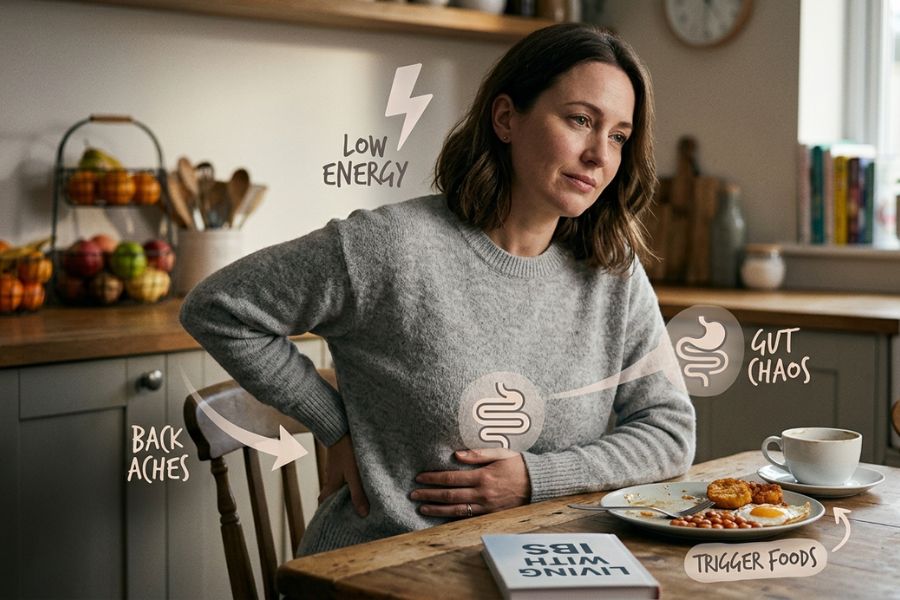
9 IBS Symptoms You Shouldn’t Ignore, Including Nausea and Back Pain
Have you ever had a day where your stomach just wouldn’t cooperate? I definitely have! Today, I want to talk to you about a really common stomach troublemaker called IBS.
IBS stands for Irritable Bowel Syndrome. That might sound like a big, scary science word, but it basically just means having a “grumpy gut.” Your bowel is the long tube inside your belly that digests your food, and when you have IBS, it gets extra sensitive and irritated easily.
The tricky part about IBS is that it’s a bit of a master of disguise. Because the symptoms look exactly like an everyday stomach ache, it’s very often misunderstood.
If your stomach hurts, you might just think, “I probably ate too much pizza,” or “I must have caught a 24-hour bug.” It’s super easy to just brush it off without realizing that your gut is actually dealing with an ongoing IBS flare-up.
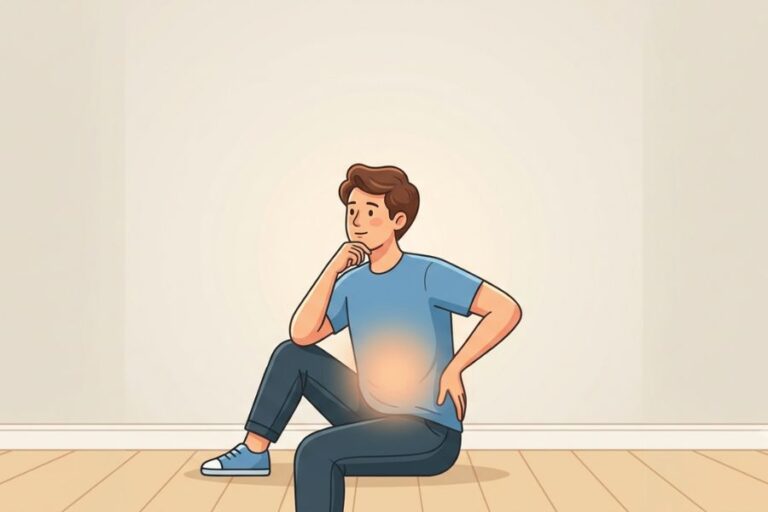
When your gut does get grumpy, it can show up in a few different ways. The most common symptoms are things like stomach cramps, bloating (where your belly fills with gas and feels like a tight balloon), and bathroom troubles like constipation or diarrhea.
But sometimes, IBS throws out unusual symptoms you wouldn’t expect. I know people who feel totally exhausted all the time, get bad headaches, or even feel a lot of extra anxiety when their IBS flares up.
Because our brain and our gut are constantly talking to each other, an unhappy stomach can actually make your whole body feel completely out of whack!
But here is the most important rule to remember: IBS is a total shapeshifter, meaning it varies completely from person to person. My gut might get bloated and slow, while my best friend’s gut might get cramped and speed things up. There is no “one way” to have IBS!
Because it’s so sneaky and different for everyone, it is super important to recognize your own symptoms early. Think of it like riding a bicycle – if you hear a weird squeaking sound and fix it right away, you keep riding smoothly.
But if you ignore it, the pedal might fall off! Figuring out what your grumpy gut is trying to tell you early on means you can make small changes to your diet and habits right away, so you can get back to feeling awesome.
9 IBS Symptoms You Shouldn’t Ignore
When your gut is trying to tell you something is wrong, it uses a few different warning signs. Here are nine symptoms you should definitely pay attention to, starting with the biggest one of all.
1. Abdominal Pain and Cramping
Out of all the signs of a grumpy gut, this is the one I hear about the most. It is the number one, most common symptom of IBS!
Why does it happen? Well, your intestines are lined with muscles that gently squeeze to push food through your body.
When you have IBS, those muscles get confused. Instead of a smooth, gentle squeeze, they might clench up too hard or spasm at the wrong time. That confused squeezing is exactly what causes that painful cramping feeling in your lower belly.
For a lot of people, this pain gets worse right after eating a big meal, or when they are feeling super stressed out. Remember how the brain and the gut talk to each other? When your brain feels stressed, your gut can panic and start cramping!
Usually, this tummy ache gets a little better after you go to the bathroom. But, there is a limit to what is normal.
If the pain is so bad that it wakes you up at night, if it makes you throw up, or if it suddenly feels much sharper and more intense than your usual cramps, that is your cue to see a doctor right away.
It is always best to let a medical expert check things out to make sure you are safe and healthy!
2. Bloating and Excessive Gas
Have you ever taken just a few bites of a meal and suddenly felt like you ate a giant, heavy feast? That super-full feeling is a major part of IBS, and it usually comes with a lot of extra gas and bloating.
Sometimes, this bloating isn’t just something you feel on the inside—you can actually see it! Your belly might puff out and swell up so much that it looks like a round balloon. I’ve definitely had days where I had to change into stretchy sweatpants because my stomach swelled up so much that my regular clothes just wouldn’t fit.
So, why does your gut blow up like this? When we eat, the tiny bacteria in our gut help break the food down. But when you have IBS, this digestive process gets a little out of balance.
Food might move too slowly through your system, or your gut might just have a hard time digesting certain things. When this happens, the bacteria start working overtime, and as they break down the food, they create tiny bubbles of gas.
When too many of those gas bubbles get trapped inside your stomach and intestines, it stretches everything out and leaves you feeling puffy, gassy, and uncomfortable!
3. Changes in Your Bowel Habits
Let’s talk about the bathroom. Normally, your gut loves a comfortable, predictable routine. But when IBS is in the driver’s seat, it completely changes your bathroom habits, especially how often you need to go and what happens when you finally get there.
Because everyone’s grumpy gut acts a little differently, doctors actually have specific names for the different ways it can act up.
First, there is IBS with Diarrhea, or IBS-D. I like to imagine the gut muscles acting like a race car moving at top speed.
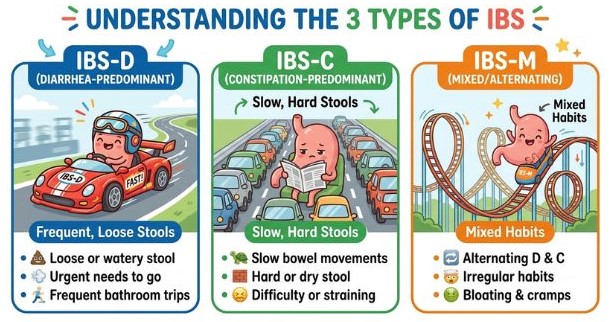
They push your food through your system way too fast. Because everything is rushing by so quickly, your body doesn’t have enough time to soak up the water from your food. This leaves you making sudden, urgent, and watery trips to the bathroom.
Then there is the exact opposite: IBS with Constipation, or IBS-C. If the first type is a race car, IBS-C is a massive traffic jam. Your gut muscles get super slow and sluggish.
Because the food is just sitting stuck in traffic inside your intestines for so long, your body soaks up way too much water. This makes everything dry, hard, and really frustrating and painful to push out.
And then there’s Mixed IBS, or IBS-M, which I honestly think is the trickiest one of all. It’s like being on a wild digestive roller coaster.
You might spend a few days stuck in that slow, uncomfortable traffic jam of constipation, and then suddenly, your gut hits the gas pedal, and you’re dealing with urgent diarrhea.
Along with these changes, you will probably notice a huge shift in your daily bathroom frequency.
You might go from having one perfectly normal trip a day to suddenly needing to run to the toilet five or six times, or maybe you won’t be able to go at all for three days straight.
Whenever your normal, everyday schedule gets completely thrown out the window like this, it is a huge clue that your gut is struggling to keep up.
4. Mucus in Stool
This next symptom is something a lot of people find a little weird or even embarrassing to talk about, but I promise you it is completely natural and something our bodies make every single day.
We are talking about finding mucus – which looks like a clear, white, or yellowish jelly—in the toilet.
First, let’s answer the big question: Is it normal? Yes, absolutely! Your intestines are lined with a special layer that creates this slippery slime to act like a protective coating.
Think of it like the engine oil in a car; it helps everything slide through your digestive tract smoothly and comfortably without causing any irritation. Normally, there is just a tiny amount of it, so it mixes into your poop and you never even notice it’s there.
But when you have IBS, this slippery slime becomes much more noticeable. Because an irritated gut is extra sensitive, it can panic and start producing way more mucus than usual to try and protect itself.
You are most likely to see it during an IBS flare-up, especially if you are dealing with sudden diarrhea or if you are straining really hard against constipation.
Seeing a blob of jelly in the toilet can definitely be a bit startling, but if it’s just your usual IBS acting up, it’s generally nothing to worry about.
However, there is a line where extra mucus shifts from being “just a grumpy gut” to a sign of something else entirely.
If you start seeing a lot of mucus every single time you go to the bathroom, or if that mucus is accompanied by red blood, a running fever, or unexplained weight loss, that is your body’s way of raising a red flag.
Those signs can indicate other conditions, like an infection or a different kind of digestive issue that causes real inflammation. Whenever those warning signs pop up, it’s always time to step away from Google and check in with a doctor!
5. Nausea
While things like cramps and bathroom habits are the most famous signs of IBS, it can also cause some surprising symptoms that happen outside your lower belly.
One of those unusual symptoms I hear about all the time is nausea – that icky, green-around-the-gills feeling where your stomach spins and you feel like you might throw up.
You might wonder, why on earth would a problem in my lower intestines make my upper stomach feel so sick?
It all comes down to a super-cool connection called the gut-brain axis. I like to think of your brain and your gut as two best friends holding walkie-talkies, constantly chatting and sending updates to each other all day long.
When your lower gut gets super irritated, stretched out by trapped gas, or tightly cramped from IBS, it panics. It sends a flurry of emergency messages up the walkie-talkie to your brain.
Your brain gets totally overwhelmed by all the alarm bells and sends a signal right back down to your upper stomach, telling it to hit the brakes.
When your stomach stops moving food through smoothly, it backs things up and leaves you feeling deeply nauseous.
A lot of people with IBS deal with this the most first thing in the morning. When your eyes open, your body naturally releases a sudden wave of hormones to help you wake up.
But for an extra-sensitive gut, that morning chemical alarm clock can be way too loud, causing your stomach to start churning before you’ve even put your feet on the floor.
Plus, lying flat for eight hours can allow gas to build up overnight, making you feel extra green when you finally sit up.
If you are already dealing with a wave of morning nausea, there are a few food culprits that can make it much worse. Heavy, greasy, or fried foods are incredibly tough for a grumpy stomach to digest, meaning they sit around even longer and keep that sick feeling going.
Super spicy foods, caffeine from coffee or sodas, and artificial sweeteners can also irritate your stomach lining, turning a little bit of morning queasiness into a much bigger problem.
6. Back Pain
When you think of IBS, you probably think of everything happening right in the middle of your stomach.
So it might come as a huge surprise to find out that a grumpy gut can actually make your lower back ache! It sounds completely unrelated, but back pain is actually one of the most commonly overlooked signs of IBS.
Also Read: IBS and Back Pain: 8 Surprising Causes and Solutions
So, how on earth does a problem in your intestines travel all the way around to your back? It usually happens because of something called referred pain.
Think of the nerves inside your body like a massive highway system with lots of cars trying to get to the same city (your brain). The nerves that carry pain signals from your irritated, swollen intestines happen to share the exact same highway as the nerves coming from your lower back.
When your gut goes into overdrive and starts blasting pain signals, the highway gets totally jammed. Your brain receives the message but gets a little confused about where the map coordinates are, making you feel the ache in your back instead of just your stomach!
Another reason your back might hurt is simple muscle tension. Think about what you do when you get a really bad stomach ache you probably hunch over, cross your arms tight against your belly, or curl up into a ball on the couch.
When your stomach is cramping for hours, your body naturally tenses up to protect it. Holding your body in that tight, guarded position is like doing a super-long workout without realizing it. Eventually, those lower back muscles get completely exhausted and start to ache.
When back pain requires medical attention: While a dull, tight ache in your lower back can go hand-in-hand with an IBS flare-up, some back pain needs a doctor’s eyes. If your back pain is so severe that you can’t walk, if it suddenly shoots down into your legs, or if you feel any numbness or tingling in your feet, that is not your IBS. Those are signs of a nerve or spine issue, and you should definitely have a doctor check it out right away!
7. Fatigue and Low Energy
Have you ever had one of those days where you sleep for eight hours, but you still feel like you could crawl right back under the covers?
I used to have days where my eyelids felt like heavy weights, and for a long time, I didn’t realize that my exhausted, low-energy feelings were actually connected to my stomach.
It turns out, IBS doesn’t just make your tummy grumpy—it can completely drain your body’s battery.
One big reason for this exhaustion is poor sleep. It is incredibly hard for your body to fall into a deep, restful sleep when your belly is tossing and turning from trapped gas, bloating, or midnight cramps.
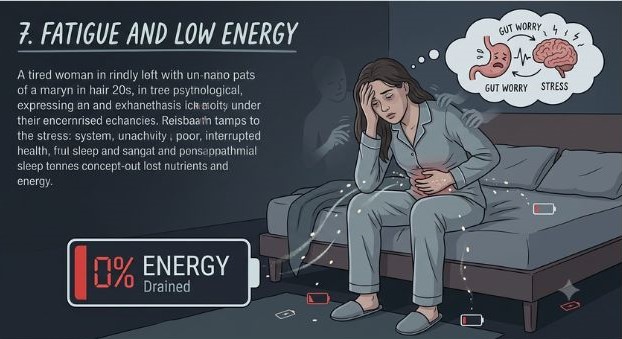
Even if you manage to stay asleep all night, your brain is still staying partially alert to the discomfort happening downstairs. It’s like trying to sleep while someone is softly tapping on your shoulder the whole time; you might not wake up, but you definitely won’t feel refreshed the next morning.
Another piece of the puzzle comes down to how your body gets its fuel. Think of your digestive system like a sponge. When you eat food, your gut is supposed to act like a sponge, soaking up all the amazing vitamins, minerals, and nutrients to give you energy to run around and think.
But when IBS forces food to rush through too quickly, or causes things to get stuck in a sluggish traffic jam, that sponge doesn’t work right. Your body misses out on those essential nutrients, and without proper fuel, your energy levels naturally tank.
Finally, there is stress-related fatigue. Remember how your brain and gut are constantly talking to each other? When your gut is in a state of panic day after day, it keeps your brain on high alert.
Dealing with that constant worry and physical discomfort uses up a massive amount of mental energy. It acts just like an app running in the background of your smartphone – you might not see it open on your screen, but it is silently draining your battery until you suddenly hit 0% and feel completely wiped out.
8. Feeling Like You Haven’t Fully Emptied Your Bowels
Imagine you are cleaning your room, and you pack away almost all your toys. You sit down on the couch to relax, but you have this nagging feeling that you missed a giant mess somewhere, so you can’t truly unwind.
That is exactly what this next symptom feels like, and it is easily one of the most frustrating parts of dealing with IBS.
Doctors call this annoying sensation incomplete evacuation. In normal words, it just means that right after you finish using the bathroom, wash your hands, and walk out the door, your body immediately signals, “Wait a minute, we aren’t actually done yet!”
This happens because of a buildup of rectal pressure. The very end of your digestive tract is lined with hyper-sensitive nerves that act like tiny security guards. Their entire job is to tell your brain when it’s time to find a restroom.
But when your gut is irritated from an IBS flare-up, these security guards get totally confused. They can mistake a little pocket of trapped gas, a tiny bit of leftover mucus, or just the natural swelling from your crampy muscles for actual poop.
They start blasting false alarms up to your brain, creating a heavy, full feeling right at the exit door.
Because your brain keeps receiving those false alarms, your natural reaction is to sit on the toilet for a long time, straining and pushing as hard as you can to get the rest out. But here is the tricky thing: when there isn’t actually anything there, straining won’t help.
In fact, pushing too hard just irritates those sensitive nerves even more, causing them to swell up and send even louder emergency signals to your brain. It creates a frustrating loop where the harder you try to force it, the more your body insists the job isn’t finished.
Learning to recognize this false alarm is a huge step, because it tells you when it’s time to take a deep breath, stop pushing, and just walk away to give your body a break.
9. Food Sensitivities That Trigger Symptoms
We’ve talked a lot about how a grumpy gut acts up, but what actually sets it off in the first place? For almost everyone I know who deals with IBS, the biggest troublemakers come straight off our dinner plates.
Having IBS doesn’t mean you have a dangerous food allergy, but it does mean you have food sensitivities. It is like your gut is a super-picky eater. If you feed it the wrong thing, it throws a massive tantrum! While everyone’s body has different rules, there is a group of common trigger foods that tend to cause the most chaos.
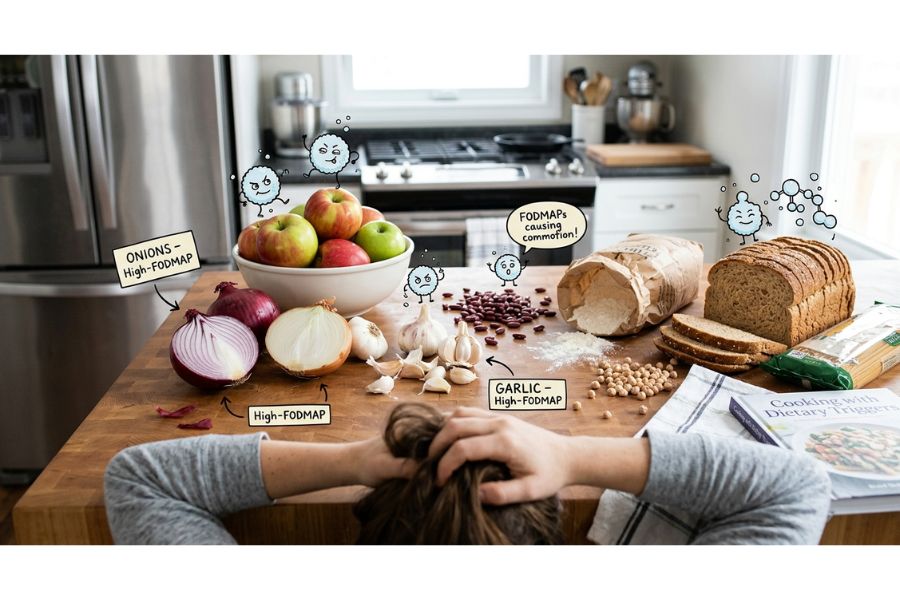
One of the biggest groups doctors talk about is called High-FODMAP foods. That is a giant, funny-sounding acronym, but you can just think of FODMAPs as a specific family of sugars and carbs found in everyday foods – like apples, onions, garlic, beans, and wheat.
For a regular stomach, these foods are totally fine. But for an IBS gut, high-FODMAP foods act like rocket fuel for your gut bacteria. They ferment super quickly in your intestines, creating a massive wave of trapped gas bubbles and cramps.
Another huge trigger is dairy, which includes things like milk, cheese, and ice cream. Dairy contains a natural sugar called lactose.
Also Read: 25 Foods That Cause Gas and Bloating
When your gut lining is already irritated and sensitive from IBS, it has a really hard time breaking down lactose. Instead of digesting smoothly, the dairy just sits there, making your stomach swell up and causing sudden, urgent trips to the bathroom.
Then we have caffeine, which you find in coffee, energy drinks, and some sodas. Remember how we compared diarrhea to a race car moving too fast?
Well, caffeine is like pouring nitrous oxide into that race car engine. It forces your gut muscles to hit the gas pedal and squeeze much faster than they should, which can instantly trigger cramps and sudden bathroom emergencies.
Fatty foods – like greasy burgers, french fries, and pizza are another common trigger. Fats take a really long time for your body to break down.
When heavy, fatty food drops into a sensitive stomach, it can either cause a massive traffic jam or signal your gut to squeeze with extra, painful force to try and move it along.
Finally, there is alcohol. Alcohol is a natural irritant to the delicate lining of your stomach. Imagine having a tiny, scratchy scrape on your arm and pouring a little vinegar or lemon juice on it – it would sting and get red, right? That is exactly how an extra-sensitive IBS gut feels when alcohol comes through, leading to lots of inflammation and bathroom trouble the next day.
Learning which of these foods makes your specific stomach upset is like becoming a detective. Once you figure out your gut’s unique “no-fly list,” you can skip the foods that cause tantrums and keep your tummy happy and calm!
When IBS Symptoms Require Immediate Medical Attention
As uncomfortable and frustrating as a grumpy gut can be, there is one comforting thing to keep in mind: IBS doesn’t actually damage your body or cause physical harm. It’s a major pain, but it’s a safe kind of problem.
However, because its symptoms live in your belly, it is incredibly important to make sure we don’t accidentally mistake a bigger health issue for a regular IBS flare-up.
To help tell the difference, I always keep an eye out for what doctors call “red flags.” These are serious warning signs that your body uses to say, “Hey, this isn’t just my usual IBS anymore—we need a medical expert to look at this right now!”
If you or anyone you know experiences any of these red flags, it’s time to skip the home remedies and head straight to a doctor.
- Blood in your stool: IBS can cause a lot of strange bathroom habits, but it never causes bleeding. If you ever see red blood in the toilet or on your toilet paper, it means there is real inflammation, an injury, or an infection somewhere inside your digestive tract that needs to be checked out immediately.
- Unexplained weight loss: If you aren’t trying to diet or exercise more, but the numbers on the scale keep dropping anyway, that is a major warning sign. It means your body isn’t absorbing its fuel correctly, or it’s using up way too much energy trying to fight off a completely different problem.
- Running a fever: A fever is like your body’s built-in thermostat turning up the heat to cook away an invading virus or bacteria. Because IBS doesn’t cause infections or physical damage, it will never give you a fever. If your tummy aches come with a high temperature, your immune system is battling a different kind of intruder.
- Persistent vomiting: While a sensitive gut can sometimes make you feel a little green and nauseous, actually throwing up over and over again is not an IBS trait. Persistent vomiting is your body’s way of rejecting food entirely, which usually points to a severe issue or a blockage in your upper digestive system.
- Severe nighttime pain: Regular IBS cramps usually like to settle down when you finally go to sleep because your brain relaxes and stops sending panicked messages to your gut. If you are dealing with stomach pain that is so intense it literally wakes you up out of a deep sleep, that is a huge clue that something else is going on.
- Symptoms that suddenly worsen: If you’ve had a mild, dull stomach ache for months, you get used to managing it. But if that familiar ache suddenly turns into a sharp, blinding pain out of nowhere that makes it hard to even stand up straight, don’t wait around to see if it passes. A sudden, massive shift in your pain level always needs immediate medical attention.
Remember, knowing these red flags isn’t about trying to scare yourself—it’s about being a smart detective for your own body. When you know what to watch out for, you can keep yourself safe and make sure you get the right help the moment your body asks for it!
Frequently Asked Questions
Frequently Asked Questions
When you are trying to figure out what is going on with your stomach, it is completely normal to have a ton of questions. I get asked these five questions all the time, so let’s clear them up with some quick, simple answers!
What are the first signs of IBS?
For most people, the very first clues that their gut is becoming grumpy are mild stomach cramps that won’t go away, feeling extra puffy and bloated after eating, and noticing that their usual bathroom schedule is suddenly acting weird.
You might realize you are suddenly dealing with random bouts of diarrhea or constipation that just keep coming back week after week.
Can IBS cause nausea?
Absolutely! Even though IBS lives in your lower intestines, it can definitely make your upper stomach feel green and spinny. Like we talked about earlier, your brain and gut are like two best friends chatting on walkie-talkies.
When your lower gut panics, it sends emergency signals up to your brain, which can accidentally trigger that icky, nauseous feeling, especially first thing in the morning.
Is back pain an IBS symptom?
Surprisingly, yes! It sounds totally unrelated, but a grumpy gut can absolutely make your lower back ache. This happens because the pain nerves from your intestines share the exact same “highway” to your brain as the nerves from your back, which confuses your brain into thinking your back hurts.
Plus, hunching over and tensing up when your stomach cramps can make your back muscles completely exhausted and sore.
What are unusual IBS symptoms?
Because IBS is a total shapeshifter, it can cause a lot of strange symptoms that happen outside your belly.
Some of the most common unusual signs are feeling completely wiped out and exhausted (even after a full night’s sleep), getting random bad headaches, feeling a lot of extra anxiety or stress, and dealing with that morning nausea or lower back pain.
Can IBS symptoms come and go?
Yes, all the time! This is actually one of the most famous things about IBS. Your gut doesn’t usually stay angry 24/7.
Instead, you will have times called “flare-ups” where your stomach throws a massive tantrum for a few days or weeks, usually triggered by stress or a certain food.
But once things settle down, your gut can go back to behaving perfectly, and you might feel totally fine for weeks before the next roller coaster ride starts.
Conclusion
Whew, we covered a lot of ground today! Taking care of your stomach can feel like trying to solve a giant puzzle, but now you know exactly what clues to look out for.
From the most common signs like belly cramps, bloating, and big shifts in your bathroom habits (whether that’s diarrhea, constipation, or a mix of both), to the more surprising signs like mucus in your stool, nausea, back pain, and feeling completely exhausted, an unhappy gut has a lot of ways to get your attention.
It can even leave you feeling like you haven’t fully finished using the bathroom or cause your stomach to throw a massive tantrum after you eat certain trigger foods.
As you keep an eye on these clues, remember the golden rule: everyone’s gut has its own unique personality.
My IBS might look completely different from yours, and your symptoms can even change from one week to the next. Because it’s such a shapeshifter, there is no single right way to handle it.
If your tummy has been acting grumpy and these symptoms just won’t go away, or if you ever notice any of those serious red-flag warnings we talked about – like blood in the toilet or a running fever – please don’t try to guess what’s wrong on your own.
Go talk to a healthcare provider or a doctor. They are the ultimate body detectives, and they can help you figure out a safe, personalized plan to calm your digestive system down.
You don’t have to deal with a roller-coaster stomach alone, and getting a professional opinion is the best step toward feeling happy, healthy, and full of energy again!

suurimgdnpxomtjiiievfwmpmezhpv