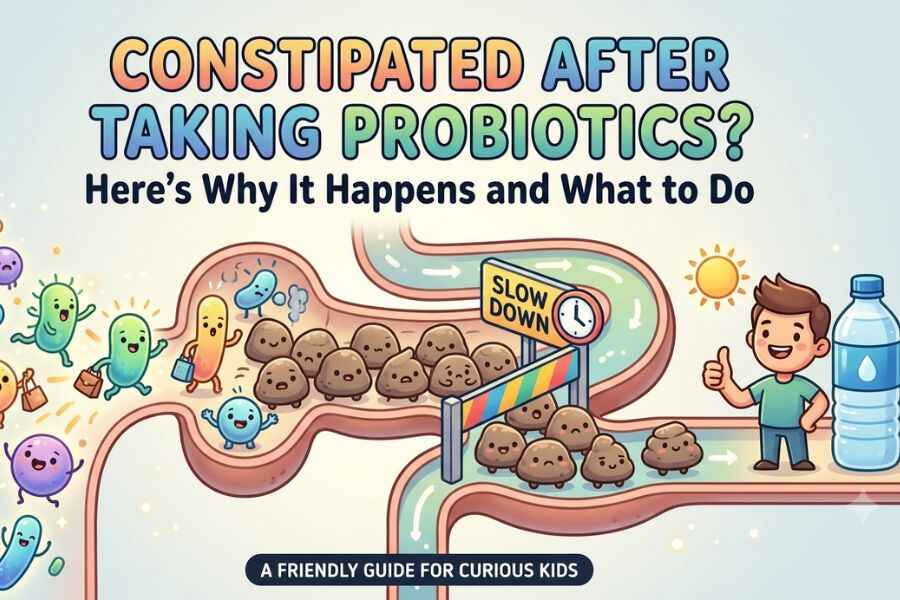
Constipated After Taking Probiotics? Here’s Why It Happens and What to Do
If you’ve ever had an upset stomach, someone has probably told you to try probiotics. We see commercials for them everywhere! They are usually marketed as the ultimate superheroes for your belly, designed to swoop in and fix everything from bloating to bathroom troubles.
So, imagine my surprise when I first started taking them and experienced the exact opposite effect. Instead of everything moving along smoothly, things came to a grinding halt. Yep, I got totally constipated.
If this is happening to you right now, don’t panic. You aren’t broken, and your probiotics aren’t fake. It turns out that getting a little backed up is actually a pretty common reaction when you introduce these new helpers to your digestive tract.
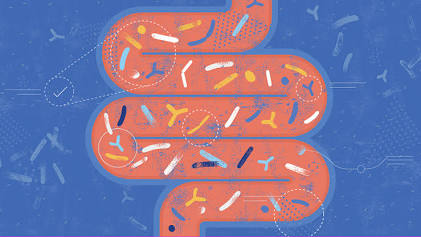
Think of your gut like a bustling city filled with trillions of tiny, microscopic bugs. When you take a probiotic capsule, you are basically dropping a massive wave of new citizens into that city all at once.
Sometimes, the old bacteria and the new bacteria have a little bit of a turf war while they figure out how to live together. This temporary chaos can slow down your digestion for a few days while your body adjusts to the new team.
The good news is that this stomach traffic jam is almost always temporary. Once the new bacteria settle in and get to work, things usually go back to normal and your tummy will actually feel much better than before.
I want to help you figure out exactly what is going on inside your belly so you can get some relief. In this article, we are going to break down.
Can Probiotics Cause Constipation?
The short answer is yes, they absolutely can.
When I first started taking them, I thought probiotics only did one thing: help you go to the bathroom. But the truth is, some people experience the exact opposite.
This side effect usually happens right at the beginning, during what doctors call the adjustment period. That is just a fancy way of saying your body needs a little bit of time to get used to the new changes.
In fact, many people notice their stomach switching things up within just a couple of days of taking their very first dose.
Not All Probiotics Are the Same
One important thing to know is that probiotics aren’t just one single ingredient. They are made of entirely different families and types of good bacteria, which we call strains.
Because there are so many different types of bacteria, they don’t all affect your digestion the same way.
Think of them like dogs: a tiny Chihuahua and a massive German Shepherd are both dogs, but they do completely different jobs! In the same way, one specific probiotic strain might make your tummy feel amazing, while a different strain might accidentally slow things down.
Why Am I Constipated After Starting Probiotics?
When my tummy first jammed up after taking probiotics, I spent hours trying to figure out what went wrong. It turns out there are a few very specific reasons why these little health supplements can cause a temporary backup.
Your Gut Microbiome Is Adjusting
Imagine inviting 50 new kids to a party at your house all at the exact same time. It takes a little while to rearrange the furniture, hang up their coats, and figure out where everyone is going to sit!
That is exactly what happens when you drop billions of new bacteria into your digestive system. Your gut has to completely rearrange its internal setup to make room for them.
While these tiny new citizens are busy moving in, your normal digestion can experience temporary shifts, slowing down your usual bathroom habits for a few days.
You’re Taking Too Much Too Soon
When I bought my very first bottle of probiotics, I made a classic rookie mistake: I went straight for the strongest one on the shelf.
If you look at a probiotic label, you will see a number followed by the letters CFU (which stands for Colony Forming Units). This is just a headcount of how many live bacteria are packed into a single dose.
If you start out with an aggressive dose like 50 billion CFUs mixed with 15 different strains (families) of bacteria it can totally shock your system. It is like trying to run a full marathon on your very first day of exercise. Your body just isn’t ready for it yet, and it responds by locking up.
You’re Not Drinking Enough Water
This is another super common mistake I see people make. When you introduce new supplements and bacteria to your belly, your body actually needs extra fluids to help process everything and keep waste moving smoothly through your intestines.
If you aren’t drinking enough water, everything inside gets dry and heavy. Think of it like trying to go down a giant backyard water slide, but forgetting to turn the garden hose on. Without that water to slick things up, you are just going to slide a few inches and get totally stuck!
The Probiotic Strain May Not Be Right for You
Remember how we compared bacteria to different dog breeds? Well, some specific strains have been studied by scientists and proven to help give you constipation relief by speeding things up.
But other strains are meant to do completely different jobs, like helping your immune system or calming down a runny tummy.
If you just picked up a random bottle, you might be taking a strain that does great things for your health, but simply doesn’t help your food move along the digestive highway.
An Existing Digestive Condition Could Be the Real Cause
Sometimes, the probiotic isn’t the real bad guy at all. Instead, it just shines a spotlight on a digestive issue that was already hiding out in your belly. A few common conditions include:
- IBS-C (Irritable Bowel Syndrome with Constipation): This is a condition where your gut is extra sensitive, easily irritated, and naturally struggles with painful blockages.
- Slow Transit Constipation: This means the muscles in your large intestine move like they are stuck in slow-motion, taking way too long to push waste out of your body.
- Pelvic Floor Dysfunction: This happens when the muscles at the very bottom of your torso forget how to relax properly, making it physically hard to go to the bathroom even if your digestion is working fine.
Medication-Related Constipation
Finally, it is always a good idea to check your medicine cabinet. Tons of everyday things like allergy medicines, iron supplements, and pain relievers are famous for causing major bathroom backups.
If you started a new medicine around the same time as your probiotics, the probiotic might just be taking the blame for a crime it didn’t commit!
Signs Your Probiotic May Be Causing Constipation
When you are dealing with a moody stomach, it can be tricky to figure out exactly what is causing the issue.
Is it something you ate? Are you stressed? Or is your new supplement secretly working against you?
To help you solve this mystery, you need to look for specific clues.
Symptoms to Watch For
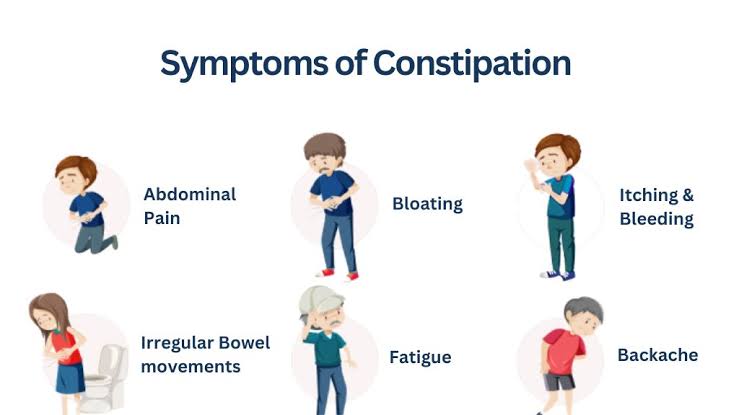
Constipation isn’t just about missing a day or two at the bathroom. There are a few different ways a backup can show up:
- Fewer Bowel Movements: You are going to the bathroom noticeably less often than your usual routine.
- Hard Stools: When you can go, it feels dry, rocky, and tough to pass.
- Straining: You find yourself pushing or working way too hard just to pass a bowel movement.
- Feeling Incompletely Emptied: You finish up, but your stomach still feels heavy, like you didn’t quite get everything out.
How to Tell If the Probiotic Is Responsible
If you have those symptoms, here is how you can play detective and find out if your probiotic is the real culprit. We do this by looking closely at two main things: timing and changes.
The Timeline Analysis: Did your bathroom routine change right after you started your new supplement? If you were totally fine on Monday, started taking your capsule on Tuesday, and felt completely stuck by Thursday, that is a huge clue. When symptoms start within days of beginning a new probiotic, it’s highly likely your gut is reacting to the new bacteria.
Another great way to test your theory is to look at what happens when your dosage changes. If you take a break from the probiotic for a few days and your stomach suddenly starts working perfectly again, you’ve found your answer.
The same goes for cutting your dose in half if your tummy relaxes and things start moving smoothly again, the probiotic was definitely the one causing the traffic jam.
How Long Does Probiotic Constipation Last?
Whenever our bodies feel a little weird, the very first question we ask is usually: How long is this going to last? When I was stuck in that uncomfortable probiotic traffic jam, I wanted an exact countdown timer for my belly.
The good news is that for most people, this side effect is just a quick bump in the road. Here is a realistic timeline of what you can expect while your body sorts itself out.
The First Few Days. Days 1 to 3
This is the peak “shock” phase for your gut city. Because it is suddenly flooded with billions of brand-new bacteria, your digestive system handles the surprise by temporarily freezing up. You will likely feel bloated, bubbly, and noticed that you can’t go to the bathroom.
The Turning Point. Weeks 1 to 2
During this time, the initial chaos starts to calm down. The new bacteria are learning how to share space and cooperate with your old bacteria. Most people find that their digestion kicks back into gear around day 7 to 10. By the end of the second week, your bathroom routine should be completely back to normal.
Longer Than Expected. After 2 Weeks
If you hit the two-week mark and you are still totally backed up, this isn’t just a temporary adjustment anymore. It usually means the specific probiotic strain you chose isn’t a good match for your unique body, or your daily dose is simply too high for your system to handle.
Listen to your body: If your constipation lasts longer than two weeks, or if it ever comes with severe stomach pain, sickness, or bleeding, stop taking the supplement right away and talk to a doctor. That is your body’s way of telling you it needs a different game plan!
Should You Stop Taking Probiotics?
When your tummy feels tight and you can’t seem to go to the bathroom, your first instinct might be to throw the whole bottle of probiotics right into the trash.
Trust me, I have been there! But before you give up on them completely, it helps to know when you should try to push through and when it is time to hit the pause button.
It often makes sense to keep taking your probiotics if it has only been a few days since you started. Your gut city is likely still in the middle of that big adjustment phase we talked about.
Think of it like cleaning a super messy bedroom; sometimes things look way worse while you are in the middle of cleaning before they finally look better.
If your symptoms are pretty mild and you aren’t in any real pain, your body probably just needs a few more days to get used to the new team.
However, you don’t have to be a superhero and suffer through major discomfort. There are definitely times when taking a break is the smartest move for your belly.

You should probably pause your probiotics if you feel totally miserable or if the bloating and constipation are making it hard to focus on your day. If it has been more than two weeks and your stomach is still stuck, that is a sign that this specific probiotic isn’t the right match for you.
Also, if you accidentally started with a super strong capsule on day one, you can pause for a few days to let your stomach reset, and then restart later with a much smaller, gentler dose.
While a little bit of a probiotic backup is normal, there are a few red alert signs that mean you should stop taking the supplement immediately and have a grown-up help you talk to a doctor.
Make sure to get a healthcare provider’s expert advice if your constipation comes with severe, sharp stomach pains, if you feel sick to your stomach and throw up, or if you ever see blood when you try to go to the bathroom.
Doctors are like the ultimate detectives for our bodies, and they can run quick tests to make sure there isn’t a bigger medical mystery going on inside your tummy.
Other Side Effects That Often Occur Alongside Constipation
When my stomach got stuck after starting probiotics, constipation wasn’t the only uninvited guest at the party. Usually, when your gut city is throwing a tantrum, it brings along a few other annoying side effects at the exact same time.
The very first thing I noticed was a ton of extra gas. My tummy started gurgling and making loud popping noises, and it felt like a tiny bubble machine was turned on inside me.
Along with that gas came bloating, which is when your stomach puffs up and feels as tight as an overinflated basketball.
It can literally feel like your pants shrunk overnight, but it is really just your intestines holding onto extra air while the old and new bacteria figure out how to get along.
All that trapped air and traffic can cause some general discomfort in your belly. For me, it wasn’t a sharp, scary pain, but more of a heavy, dull ache and a lot of stretching cramps.
It feels like your stomach muscles are constantly squeezing or trying to wring out a wet towel, which can make you just want to curl up on the couch and rest for a little while.
Finally, you will probably notice some major changes in how often you actually visit the restroom. Your normal bathroom schedule might get completely wacky. You might skip two whole days, then have a tiny bathroom break, and then skip another day.
It takes a while for your body’s inner clock to reset itself, so you shouldn’t be surprised if your usual daily routine goes completely out the window while your belly is adjusting.
When Constipation Is a Sign of Something More Serious
A little probiotic backup is usually nothing to worry about. But I learned about a few important warning signs. Doctors call these “red flags.” They mean it is time to stop playing detective by yourself. Most of the time, your belly is just adjusting. Still, it is always better to be safe than sorry with your health.
One big warning sign is finding blood when you use the bathroom. This can happen from straining too hard against a dry backup. Even so, it is a major clue. Your body needs a professional look from a medical expert.
Another big sign is sharp pain in your belly. A little mild cramping or heavy bloating is normal at first. But your stomach should not hurt badly. If you are doubling over, crying, or cannot stand up straight, that is a clear signal. Something else is going on inside.
You should also look out for unexplained weight loss. This means dropping weight without even trying. Maybe you feel so backed up that you lose your appetite completely. You might even stop eating your normal meals. That is your body’s way of telling you it needs help.
Finally, watch out for stubborn symptoms. Probiotic adjustment should not last forever. Sometimes constipation drags on for weeks and weeks.
Nothing you do seems to make it better. If that happens, have a grown-up help you schedule a visit to the doctor. They can solve the real mystery behind your stubborn tummy.
One Comment